Compare Golf Stay Options: Friction-to-Fairway Blueprint
The evolution of golf tourism from a fragmented, regional pastime into a multi-billion-dollar global industry has introduced immense complexity into the travel planning ecosystem. Historically, a golf vacation required little more than booking a room at a resort that happened to feature an adjacent eighteen-hole track. Today, the intersection of diverse hospitality models, hyper-specialized real estate developments, private member-club networks, and variable access regimes means that the structural design of a golf trip dictates its ultimate utility, cost-efficiency, and athletic viability.
For the discerning golfer, corporate planner, or luxury travel architect, selecting the appropriate lodging and access framework requires balancing physical proximity, spatial privacy, culinary flexibility, and practice-facility availability. The decision is rarely binary; it is an optimization problem featuring multiple moving parts. When players fail to systematically evaluate these components, they routinely face systemic friction, such as unexpected transport bottlenecks, restrictive tee-sheet allocations, or hidden amenity surcharges that undermine the core purpose of the itinerary.
Consequently, a rigorous methodology is needed to parse the modern landscape of golf hospitality. Moving beyond superficial marketing designations—which tend to label every property adjacent to a fairground as an “elite golf destination”—this analysis dissects the operational realities, financial structures, and hidden trade-offs embedded within different accommodation strategies. By approaching the problem through a structural and logistical lens, travelers can maximize both their time on the fairways and their long-term capital efficiency.
Understanding “Compare Golf Stay Options”

To accurately compare golf stay options, one must look beyond standard hotel star ratings and evaluate the operational relationship between the bed and the first tee box. In the broader travel market, consumers frequently treat the “stay” and the “play” as two independent line items that happen to exist in the same zip code. This approach overlooks how specific hospitality models—ranging from integrated mega-resorts to private, off-property villa rentals—fundamentally dictate a golfer’s daily pacing, transit friction, and access to premium tee sheets.
The Analytical Framework
At its core, evaluating this domain requires assessing three distinct, interacting vectors:
-
Spatial Proximity and Friction Costs: The literal physical distance between the living quarters, the practice range, and the opening tee box, measured by the time and effort required to transition between them.
-
Tee-Sheet Sovereignty: The level of guaranteed, high-priority access a guest has to primary and secondary courses, particularly during peak morning hours when club members or commercial blocks compete for slots.
-
Logistical Autonomy: The degree to which a guest can customize their daily routine—including meals, equipment storage, and physical recovery—without being forced into the rigid operational schedules of a large resort hotel.
Oversimplification Risks
The travel industry often compresses these variables into simplified “Stay and Play” packages. This categorization obscures significant structural variations. For instance, a package might promise “unlimited golf,” but fail to mention that this access is restricted to an inferior secondary course, or that rounds can only be booked after 2:00 PM when daylight is limited.
Similarly, an independent luxury villa may boast a beautiful location but lack an official relationship with local clubs, forcing guests to navigate public booking platforms with no guarantee of securing consecutive tee times. To truly compare golf stay options, an analyst must look past these marketing bundles and evaluate the underlying operational agreements, property rights, and transit requirements.
Deep Contextual Background: The Evolution of Golf Hospitality
The structural models defining contemporary golf travel did not emerge in a vacuum. They are the product of decades of real estate development trends, shifting consumer wealth dynamics, and changing architectural philosophies within the game itself.
The Early Foundations
In the early to mid-20th century, elite golf travel was defined by grand rail-access hotels, particularly across Scotland, Ireland, and the northeastern United States. Properties like Gleneagles or the early iterations of Pinehurst were self-contained destinations where the wealthy spent weeks at a time. The golf was an elegant component of a broader social calendar. Lodging was formal, centralized, and deeply integrated into the hotel’s main building, creating an atmosphere that prioritized social status over quick access to the fairways.
The Real Estate and Master-Planned Resort Boom
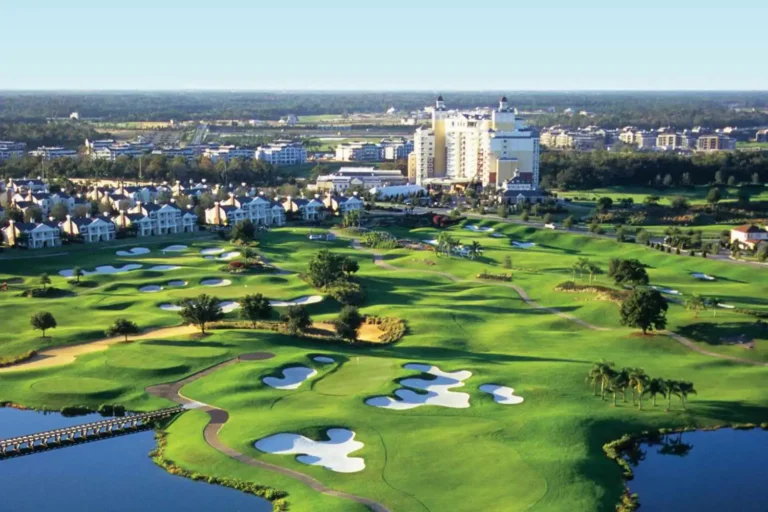
The 1980s and 1990s introduced a very different model: the sun belt mega-resort. Driven by real estate speculation in regions like Florida, Arizona, Spain, and parts of Southeast Asia, developers used championship golf courses as anchor amenities to sell surrounding condominiums and single-family homes.
Hospitality in this era grew expansive and car-centric. Hotel complexes were often separated from the clubhouse by winding roads, requiring shuttle transfers and golf cart use. This layout introduced physical friction, turning simple tasks like hitting a bucket of balls before breakfast into a logistically complex chore.
The Rise of Remote Minimalist Purism
By the turn of the 21st century, a counter-movement took hold, sparked by remote destinations that prioritized natural architecture and walking-only link courses built on pristine, rugged dunes. These properties abandoned the sprawling hotel model in favor of clustered, high-utility golf lodges, cottages, and bunkhouses positioned right next to the practice greens. This design eliminated transit friction, returning the focus entirely to the sport and proving that dedicated players would happily trade marble bathtubs for a thirty-second walk to the first tee.
Today, the market has split into several distinct paths. Travelers now choose between remote, self-contained minimalist properties, ultra-luxury integrated resorts, and a growing sector of private, off-property luxury homes managed by high-end concierge services. Each model offers a different balance of convenience, privacy, and course access, making a structured approach essential for anyone trying to compare golf stay options effectively.
Conceptual Frameworks and Mental Models
To systematically evaluate accommodation options without falling into marketing traps, planners can use several key analytical frameworks. These models convert abstract preferences into clear, actionable criteria.
1. The Friction-to-Fairway Ratio (FFR)
This quantitative index measures the time and logistical effort required to move from one’s bed to the first tee box or practice facility.
A low score (e.g., 0.05) indicates an integrated layout where a player walks directly from a cottage to the tee. A high score (e.g., 0.25 or greater) reveals significant systemic friction—such as needing to load bags into a vehicle, drive to a separate clubhouse, and navigate public parking—which can drain energy before the round even begins.
2. The Spatial Autonomy vs. Amenity Access Matrix
This matrix categorizes accommodations based on the balance between personal privacy and access to broader resort infrastructure.
Planners use this matrix to identify options that align with a group’s social preferences. For example, a corporate retreat may require the high amenity access of a resort hotel, while a group of competitive amateurs might prefer the low friction and shared spaces of on-course managed cottages.
3. The Tee-Sheet Sovereignty Hierarchy
This model ranks accommodations based on the legal and operational strength of their golf access rights, helping travelers understand exactly how secure their playing times are.
By placing a potential property within this hierarchy, travelers can accurately gauge the risk of booking a trip only to find themselves frozen out of the destination’s best courses.
Key Categories and Accommodation Variations
Choosing the right golf accommodation requires analyzing several distinct lodging models. Each framework presents clear, unavoidable trade-offs between cost, privacy, convenience, and access.
1. Fully Integrated On-Site Resorts
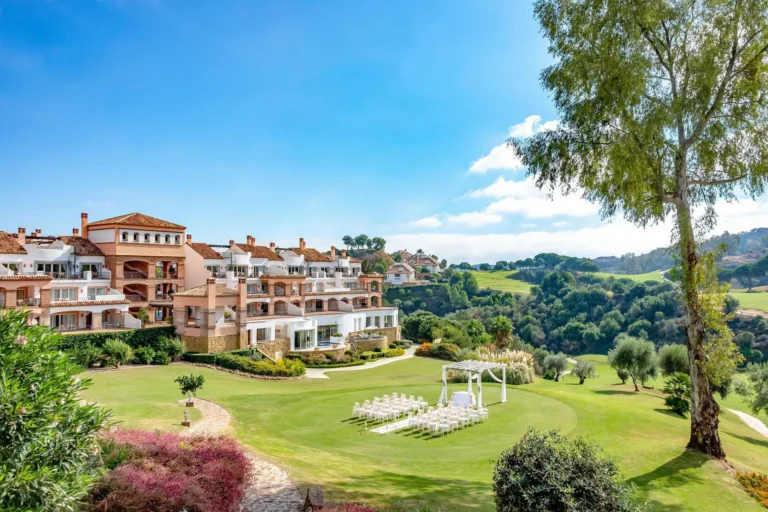
The traditional cornerstone of golf travel is where a flagship hotel sits directly at the center of one or more championship courses.
-
Trade-offs: Offers convenient, single-bill convenience and immediate access to dining and spa facilities. However, these properties can feel crowded during peak seasons, and guests must often share public spaces with large corporate conventions or wedding parties.
2. On-Course Managed Cottages and Estates
Boutique, multi-bedroom homes built directly along the fairways, owned and operated by the golf club itself.
-
Trade-offs: Provides an excellent balance of high privacy, shared living spaces for groups, and low friction, with golf carts often parked right outside the door. The primary drawback is limited availability, requiring bookings up to a year in advance, along with higher base costs that remain fixed regardless of occupancy.
3. Independent Luxury Villas (Off-Property, Managed)
High-end private estates located near major golf corridors are managed by luxury hospitality firms that handle staffing, private chefs, and ground logistics.
-
Trade-offs: Delivers exceptional privacy, expansive living spaces, and tailored culinary options away from resort crowds. However, it introduces transit friction, requiring daily vehicle transfers to the courses, and relies on external concierges to secure tee times.
4. Private Member-Club Quarters
Exclusive, member-only accommodations located within the gates of traditional, highly restricted golf clubs.
-
Trade-offs: Offers access to quiet, pristine courses, historic clubhouses, and an authentic, uncrowded playing environment. Access, however, requires a member introduction, corporate sponsorship, or a reciprocal agreement, making it difficult to book for the general public.
5. Urban Luxury Hotels with Dedicated Country Club Alliances
Five-star city hotels that maintain exclusive, private playing arrangements with premier country clubs located just outside the metropolitan area.
-
Trade-offs: Perfect for travelers who want to combine golf with city dining, nightlife, and cultural sights. The trade-off is significant transit friction, requiring long drives through city traffic to reach the course, which eliminates the possibility of quick, spontaneous practice sessions.
6. Remote Minimalist Golf Lodges
Properties built with one clear focus: serving the dedicated golfer. These accommodations offer clean, functional rooms positioned just steps from the practice greens and first tee.
-
Trade-offs: Offers a pure, distraction-free golf experience with very low transit friction. However, off-course amenities are minimal—dining menus are often simple, and there are rarely extensive spa facilities or alternative recreational activities for non-golfing companions.
Comparative Analysis of Core Golf Accommodations
The following matrix organizes these categories across critical operational metrics, helping travelers compare golf stay options based on their specific needs:
Realistic Decision Logic for Planners
To determine the ideal lodging configuration, a travel planner should answer two primary operational questions:
-
What is the primary driver of the itinerary?
-
If Athletic Efficiency: Focus on On-Course Managed Cottages or Remote Minimalist Golf Lodges. These options keep the team centered around the sport, minimizing transit delays and maximizing daily holes played.
-
If Experiential Isolation: Focus on Independent Luxury Villas or Private Member-Club Quarters, prioritizing spatial privacy, custom schedules, and quiet surroundings over quick access to a resort hub.
-
-
Does the group require centralized resort amenities or customized private spaces?
-
If Centralized Resort Amenities: Select Fully Integrated On-Site Resorts to ensure easy access to varied dining, spa, and children’s facilities without leaving the property.
-
If Customized Private Spaces: Select Independent Luxury Villas, allowing a private chef to manage meals and providing dedicated, exclusive spaces for evening social gatherings.
-
Detailed Real-World Operational Scenarios
Examining how different accommodation choices perform under real-world conditions highlights the practical realities and hidden challenges of golf trip execution.
The Multi-Generation Family Trip
-
The Group: Eight individuals, including four active golfers, two non-golfing spouses, and two young children.
-
The Selected Lodging: An independent luxury villa located fifteen minutes away from a premier golf complex.
-
The Logistical Bottleneck: Because the group is split between golfers and non-golfers, a single vehicle transfer plan fails. Golfers require early morning departures for their tee times, while non-golfers want to use the vehicle for mid-day sightseeing. This creates friction, requiring constant shuttle coordination and generating unexpected local transport costs.
-
The Analytical Correction: For mixed groups, a Fully Integrated On-Site Resort or an On-Course Managed Cottage performs much better. Golfers can simply walk or take a quick cart ride to the tee box, leaving the primary ground vehicles available for the rest of the family’s daily activities.
The Eight-Player Competitive “Buddy Trip”
-
The Group: Eight low-handicap golfers playing thirty-six holes a day over four days.
-
The Selected Lodging: A standard luxury resort hotel, booking four separate double-occupancy rooms.
-
The Logistical Bottleneck: After a grueling 36-hole day, the players are scattered across different hotel wings. Social interaction breaks down because there is no central, private space to gather, review scorecards, and relax. Additionally, coordinating breakfast for eight people at a busy hotel buffet introduces morning delays that threaten early tee times.
-
The Analytical Correction: Utilizing an On-Course Managed Cottage featuring four double bedrooms and a large central living room completely changes the dynamic. It keeps the group together, allows for efficient, self-paced breakfasts, and provides a private environment for evening camaraderie right next to the course.
The Cross-Border Corporate Retreat
-
The Group: Twelve corporate clients requiring high-end hospitality, private meeting spaces, and access to an exclusive, top-ranked course.
-
The Selected Lodging: An upscale boutique hotel in a nearby city center, relying on an alliance concierge to book rounds at a prestigious suburban country club.
-
The Logistical Bottleneck: Morning traffic delays turn a planned thirty-minute drive into a ninety-minute commute. The clients arrive stressed, miss their warmup windows on the practice range, and find themselves pushed to afternoon tee times, which forces them to cut their evening business dinner short.
-
The Analytical Correction: Choosing Private Member-Club Quarters or a dedicated On-Site Resort Boardroom Wing eliminates transit risks. Meeting spaces and the first tee are located within the same secure gate, ensuring the business and playing schedules run precisely on time.
The Solo Architectural Purist Tour
-
The Group: A single dedicated player traveling to a remote coastal region to experience historic links courses.
-
The Selected Lodging: A luxury coastal bed-and-breakfast located ten miles away from the target courses.
-
The Logistical Bottleneck: The local area has sparse rideshare coverage, and the B&B’s breakfast schedule starts too late to accommodate early morning tee times. The player spends significant effort managing car rentals and skipping meals to catch the optimal morning weather windows on the links.
-
The Analytical Correction: A Remote Minimalist Golf Lodge built right on the bluffs fits this scenario perfectly. It offers simple, high-utility lodging tailored to early departures, with breakfast operating in sync with the caddie master’s schedule, allowing the solo traveler to focus entirely on the architectural experience.
Planning, Cost, and Resource Dynamics
A thorough financial analysis of golf accommodations must look past the nightly room rate to examine hidden fees, transit costs, and the value of time saved.
Direct vs. Indirect Cost Drivers
-
Amenity Access Surcharges: Many high-end integrated resorts charge daily resort fees that may or may not cover golf bag storage, practice ball use, and fitness center access. Planners must verify whether these fees are included or billed as separate line items.
-
The True Cost of Vehicle Transfers: Opting for off-property villas to save on lodging costs often introduces significant transit expenses. Renting large SUVs or hiring private vans to move a group and their oversized golf travel bags can quickly erase any initial lodging savings.
-
The Value of Time and Tee-Sheet Priority: Time spent riding in a shuttle is time lost for recovery, practice, or leisure. Securing an on-site cottage that includes guaranteed morning tee times provides real value by protecting the group’s daily schedule from delays.
Capital and Resource Allocation Framework
The following table provides a range-based look at typical cost distributions across different stay models, assuming a four-player group during peak playing season:
Tools, Strategies, and Support Systems
To systematically compare golf stay options and manage complex itineraries, travel planners rely on specialized services, tracking platforms, and logistics networks.
1. Global Club Shipping and Forwarding Services
Companies like Luggage Forward or Ship Sticks handle door-to-door transit for golf clubs, bypassing airline baggage carousels. When evaluating an off-property villa versus an on-site resort, planners use these networks to ship clubs directly to the course’s caddie master, ensuring the equipment arrives safely regardless of where the guests are sleeping.
2. Specialized Golf Travel Advisors and Network Connoisseurs
Using specialist agencies that belong to networks like Virtuoso or hold direct relationships with club boards allows planners to access inventory that isn’t listed on public booking sites. These advisors can often secure on-course cottages or member quarters that appear fully booked to the general public.
3. Real-Time Tee Sheet Integration Software
Advanced booking engines used by major golf destinations allow travelers to view live tee-sheet availability before choosing their lodging. Checking these platforms ensures that a group doesn’t book a non-refundable luxury villa only to find that the adjacent course is closed for a private tournament during their stay.
4. Professional Ground Transport Brokers
For off-property itineraries, hiring a dedicated transport coordinator who understands the space requirements of golf travel is essential. These brokers provide executive sprinters equipped with extra cargo space for oversized travel bags, ensuring smooth daily transfers between the villa and the course.
5. Private Chef and Premium Villa Provisioning Networks
When opting for independent villas, using local luxury provisioning services ensures the kitchen is fully stocked with customized performance nutrition, hydration options, and recovery meals before the group arrives, matching the convenience of a five-star resort hotel.
6. Automated Weather and Microclimate Trackers
Platforms like Windy or PredictWind are critical when staying at properties across coastal links or mountain terrains. Monitoring wind patterns and incoming fronts helps planners adjust their daily schedule, choosing the best weather windows for play and coordinating indoor activities during storms.
Risk Landscape and Failure Modes
A complex golf vacation can encounter various operational bottlenecks. Recognizing these potential failure modes early allows planners to build helpful redundancies into the schedule.
1. The Disconnected Concierge Failure
-
The Risk: A traveler books a premium off-property estate based on a concierge’s promise that they can easily arrange play at an adjacent private club. Upon arrival, the club declines the booking because they do not recognize the third-party concierge service.
-
The Prevention: Never accept vague promises of course access. Require written confirmation of secured tee times and confirmation codes from the host club before booking non-refundable off-property accommodations.
2. The Maintenance Window Trap
-
The Risk: Booking a luxury golf resort stay during routine green aeration or fairway overseeding, resulting in poor playing conditions and sandy, slow greens.
-
The Prevention: Check the course’s maintenance calendar directly with the head greenskeeper before finalizing dates. If maintenance is scheduled, look for alternative lodging near courses with unaffected turf windows.
3. The Transport Bottleneck
-
The Risk: Staying at an urban luxury hotel and missing a morning tee time due to unexpected highway traffic or vehicle mechanical issues.
-
The Prevention: Build a forty-five-minute buffer into all off-property morning transits, or choose an on-site lodging option that eliminates the need for highway travel.
4. The Daylight Cutoff
-
The Risk: Being forced into a late afternoon tee time due to low priority status on the resort tee sheet, resulting in the round being cut short by darkness.
-
The Prevention: Prioritize accommodations that offer Level 3 or Level 4 Tee-Sheet Sovereignty, guaranteeing early morning access windows when daylight is secure.
Governance, Maintenance, and Long-Term Adaptation
For private groups, corporate travel managers, or club committees that organize annual trips, maintaining a consistent quality standards framework is key to long-term success.
The Annual Review Routine
-
The Post-Trip Debrief: Document any logistical issues, unexpected fees, or service lapses immediately after returning. Use this data to update your property scorecard for future planning.
-
The Turf and Infrastructure Check: Monitor ongoing renovations and management changes at target destinations. A resort that offered exceptional service last year may see a decline if it changes ownership or undergoes extensive construction.
-
The Relationship Renewal Window: Re-confirm corporate accounts and member-club alliances early each year to secure priority access to limited lodging options like on-course cottages before they open to the public.
Measurement, Tracking, and Evaluation
Evaluating the success of a golf vacation requires tracking both hard operational numbers and the general satisfaction of the players.
Leading vs. Lagging Indicators of Success
-
Leading Indicators (Pre-Trip): Getting preferred morning tee times locked in early, receiving clear answers from the resort concierge, and securing on-course lodging confirmations well ahead of departure.
-
Lagging Indicators (Post-Trip): Average round duration under four and a half hours, zero missed transit windows, and minimal unexpected transport or amenity fees on the final bill.
Quantitative vs. Qualitative Signals
-
Quantitative Signal: Tracking the exact time required to move from the room to the practice range. A consistent transition under ten minutes proves the accommodation layout is logistically efficient.
-
Qualitative Signal: The group completes a multi-round trip feeling physically refreshed, socially connected, and satisfied with their time on the fairways, without experiencing travel fatigue or logistical stress.
Standard Operational Itinerary Templates
The following examples demonstrate how different accommodation models alter the daily flow and pacing of a golf trip:
- Template A: The Low-Friction Integrated Cottage Layout
- Template B: The Dispersed Luxury Villa Layout
Common Misconceptions and Oversimplifications
Staying off-property always saves money compared to an on-site resort.
-
Correction: While an off-property villa might show a lower nightly rate, adding the costs of daily executive van transfers, premium rental cars, and third-party tee-sheet booking fees often makes it more expensive than an integrated on-site stay.
“Unlimited Golf” packages guarantee you can play as many holes as you want.
-
Correction: These packages are subject to tee-sheet availability. During peak seasons, crowded courses mean you will rarely finish more than eighteen holes a day, making the “unlimited” promise ineffective.
A luxury concierge can always secure a tee time at a private club.
-
Correction: Traditional private clubs enforce strict member-only access rules. If a club doesn’t maintain an official alliance or reciprocal agreement with your lodging, an outside concierge will have very little leverage.
All on-site resort rooms offer identical access to the fairways.
-
Correction: Large mega-resorts often feature rooms that are miles away from the golf house. Unless you book a specific on-course villa or cottage wing, you may still face a long shuttle ride to get to the first tee.
Booking a trip during a major resort tournament guarantees perfect conditions.
-
Correction: While the course may look pristine, tournament weeks bring severe booking restrictions, closed practice areas, high crowds, and limited access for casual resort guests.
Walking-only courses are less physically demanding if you hire a caddie.
-
Correction: Walking multiple miles over undulating dunes is physically taxing regardless of who carries the bag. Proper physical preparation and well-paced lodging remain essential for recovery.
Modern golf simulators can completely substitute for outdoor practice facilities during bad weather.
-
Correction: Simulators are excellent for swing analysis and numbers calibration, but they cannot replicate real turf interaction, sand play, or wind management, making open-air practice facilities irreplaceable for serious game preparation.
Ethical, Practical, and Contextual Considerations
The modern golf travel sector operates within a broader global context that requires balancing personal leisure with responsible community interaction. When comparing different travel frameworks, planners should consider how their accommodation choices impact local environments and economies.
Environmental Responsibility in Resort Operations
-
Water and Land Stewardship: Leading golf resorts increasingly utilize recycled water networks, plant drought-resistant native grasses, and set aside wildlife protection zones. Choosing properties that prioritize these environmental practices supports the long-term sustainability of the sport.
-
Logistical Efficiency: Selecting on-site accommodations reduces daily vehicle use and shortens transport routes, helping minimize the carbon footprint of the trip.
Community and Economic Integration
-
Supporting Local Economies: Independent villa models and off-property boutique hotels often direct spending into the local community by employing regional staff, sourcing food from nearby purists, and utilizing local services.
-
Respecting Historic Traditions: Visiting traditional, private clubs requires strict adherence to long-standing club protocols and local customs. Showing respect for these traditions helps foster positive relationships between traveling golfers and host communities.
Conclusion
Successfully navigating the modern golf hospitality landscape requires moving past superficial marketing terms to analyze the practical, operational realities of each destination. Whether a group chooses the convenient, low-friction environment of an on-course managed cottage, the centralized amenities of a flagship resort, or the expansive privacy of an independent luxury villa, the decision must balance spatial proximity, tee-sheet priority, and daily group dynamics.
By using structured frameworks like the Friction-to-Fairway Ratio and verifying tee-sheet sovereignty before finalizing bookings, travel architects can eliminate unexpected logistical issues. Ultimately, a well-chosen golf accommodation should stay quietly in the background, handling daily details efficiently so that players can direct all their energy toward enjoying the game and the journey.