Golf Resorts Planning Tips: Strategic Procurement Guide
The physical layout and long-term management of high-tier athletic corridors involve complex land-use economics and strict capital frameworks. Premium properties are rarely mere hotel additions or real estate backdrops. Instead, they are intensive land deployments. They are engineered to capture high-margin leisure spending, balance corporate portfolios, and maximize TrevPAR (Total Revenue Per Available Player).
Infrastructure and Spatial Requirements
An elite multi-course campus requires hundreds of acres of contiguous, diverse land. This spatial footprint demands advanced subsurface drainage and guaranteed water entitlements. Operators must also employ a specialized labor force. This team must manage distinct turfgrass species across variable North American microclimates.
Adopting an Asset-Evaluation Mindset
Corporate procurement directors and family office managers must avoid consumer-facing marketing materials. They should adopt a strict asset-evaluation mindset instead. The economics of high-end sports travel differ fundamentally from standard luxury lodging. A top-tier golf property must balance competing demands. It must manage high-paying corporate room blocks, exclusive private memberships, and transient players.
Dynamic Operational Economics
This operational tension creates a highly fluid pricing environment. Central reservation engines continuously adjust baseline pricing. These adjustments depend on historical booking velocities, regional convention calendars, and essential course maintenance windows.
Understanding “golf resorts planning tips”

Corporate asset managers and family office directors often misjudge high-end athletic properties. They frequently treat them as uniform assets defined only by room rates or service awards. This narrow view ignores the critical factors that separate world-class enclaves from standard suburban subdivisions. The category of “golf resorts planning” covers a diverse range of complex land-use developments. Each property is shaped by unique real estate models, regional microclimates, and design histories. To evaluate these assets, you must look past generic lifestyle branding. Focus instead on course quality, long-term property appreciation, and neighborhood stability.
Architectural and Agronomic Integrity
True depth exists where architectural intent meets agronomic execution. A premier layout uses natural topography to create an engaging athletic test. It utilizes dunes, desert canyons, or mountains. This makes the course feel “discovered” rather than manufactured.
Properties that rely on heavy earthmoving to force a layout on clay soil often struggle. These courses lack design depth and face persistent drainage issues. This is why natural sand-belt properties dominate elite rankings. Their sandy soil profiles absorb rainfall effortlessly. This maintains firm, fast playing surfaces year-round. In contrast, artificial layouts often suffer from standing water and turf degradation.
Distinguishing Luxury from Athletic Performance
You must separate premium course design from generic residential amenities. Top-tier fitness centers, massive clubhouses, and private spas drive up costs. However, these additions offer no direct value to the actual golf experience or the underlying asset. Instead, you should prioritize communities that focus on world-class practice facilities and multi-course variety. Most importantly, verify secure water entitlements. A golf course with unstable water rights is a high-risk liability, regardless of the quality of its other amenities.
Historical Evolution and Systemic Development of American Sports Lodging
The history of American destination golf reflects evolving infrastructure, finance, and design philosophy. Understanding this history is vital for assessing the character and long-term viability of high-end golf assets today.
1: The Railroad & Gilded Age (Late 19th – Early 20th Century)
The rapid expansion of the national rail network transformed leisure travel. Urban elites sought to escape industrial cities for interior retreats.
-
Key Drivers: Rail access to topographically interesting locations.
-
Design Philosophy: Traditional, walking-focused layouts. Architects followed the natural roll of the land. They used minimal earthmoving and native vegetation to frame strategic challenges.
-
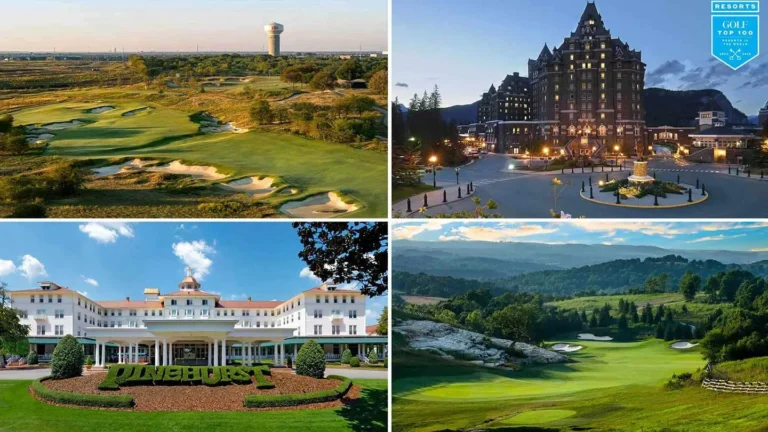
Examples: Pinehurst (North Carolina) and The Homestead (Virginia).
2: The Interstate & Real Estate Expansion (Post-WWII – 1990s)
After World War II, the interstate highway system and commercial aviation shifted the industry toward the Sunbelt. This era introduced the master-planned residential resort model.
-
Key Drivers: Golf courses functioned as tools to drive real estate sales for fairway-facing homes.
-
Design Philosophy: This period favored heavy earthmoving, penal water hazards, and artificial framing. The goal was to maximize the number of residential lots.
-
Operational Strain: These courses required intensive chemical use and high-volume irrigation. Rising water costs and changing consumer tastes have made this high-overhead model increasingly vulnerable.
3: The Minimalist & Sustainable Era (Late 1990s – Present)
The late 1990s marked a return to the roots of the game. It prioritized the authenticity of the “links” experience over high-density housing.
-
Key Drivers: Golfers demonstrated a willingness to travel to remote, “walking-only” clubs on natural, sandy terrain.
-
Design Philosophy: Minimalist principles emphasize preserving native landscapes. Architects maximize natural sand features and use sustainable, low-input turf varieties like fescue.
-
Modern Management: Developers now combine these traditional design principles with advanced digital tools. These tools optimize resource management and capture long-term brand authority in the high-end travel market.
Conceptual Frameworks and Allocation Mental Models
To systematically evaluate premier properties and choose the ideal venue without overpaying for unnecessary amenities, organizers can use several core operational and design frameworks.
1. The Sand-Belt Topographic Threshold (STT)
This framework isolates the exact soil and terrain conditions that guarantee firm, fast playing surfaces year-round, helping you avoid properties prone to mud and severe drainage delays.
-
Application: Use the STT framework when evaluating real estate destinations during unstable weather months. Choosing a property built on a deep, natural sand bed ensures that even heavy coastal rain will drain away in minutes, protecting your property investment from course closures and muddy playing conditions.
-
Limitations: This framework naturally favors coastal links or specific interior sandhill areas, which are often remote and require longer travel times.
2. The Architectural Variety Index (AVI)
This routing model measures the true athletic value of a master-planned community campus by tracking how many distinct course designers are represented across its multi-course layouts.
-
Application: Apply this model when planning a long-term acquisition or a high-end itinerary. Selecting a venue that features distinct courses designed by different legendary figures—such as Tom Doak, Bill Coore, and Ben Crenshaw—provides excellent design variety on a single campus, keeping the matches engaging without requiring off-site travel.
-
Limitations: This index requires larger multi-course properties, which often demand longer booking lead times and strict stay-and-play lodging commitments.
3. The TrevPAR Efficiency Coefficient (TEC)
This procurement matrix helps you calculate the true financial return of your property capital by separating pure golf access expenses from non-golf luxury real estate markup charges.
-
Application: Use this tool to analyze confusing stay-and-play travel packages or membership dues. Calculating the TEC allows you to identify when a property is inflating its package prices to cover expensive non-golf amenities like luxury spas or fine dining rooms that your group may never use.
-
Limitations: This calculation requires gathering complete pricing details upfront, including caddie fees, replay rates, and local resort taxes.
Sourcing Resort Typologies, Design Philosophies, and Operational Trade-Offs
To navigate the premium golf travel and real estate market successfully, consumers must categorize destination properties by their core structural designs. The table below outlines the primary resort categories found across the United States, along with their design focuses, core strengths, and hidden financial downsides.
United States Golf Resort and Community Classification Matrix
Applying sound golf resort planning tips requires recognizing that the “best” venue is not the one with the highest marketing spend, but the one whose operational structure—the soil, the routing, and the maintenance cycle—aligns perfectly with your specific athletic requirements and financial parameters.
Detailed Real-World Destination Procurement Scenarios
Optimizing Multi-Course Access via Centralized Sandhills Sourcing
A corporate travel director managed a 16-player executive retreat, looking to provide a world-class competitive experience without the logistical hassle of moving vehicles between different courses. By utilizing effective golf resort planning tips, the director bypassed scattered, single-course options and selected a historic, multi-course sandhills property in North Carolina that features ten courses centered around a single walkable village. They booked a four-night package in the resort’s multi-bedroom loyalty cottages, allowing the entire group to walk straight from their rooms to the practice facilities and starting tees every morning.
The second-order effect of choosing a centralized campus was the elimination of rental vans and daily travel coordination, saving over $2,400 in ground logistics costs while providing a smooth, cohesive team experience. The primary failure mode remained the potential for professional tournament scheduling, which could compress tee-time availability, forcing the group onto alternative layouts within the same campus.
Managing Weather Risks at Remote Minimalist Links Properties
A golf society coordinator arranged an annual 24-player spring championship on the rugged southern Oregon coast, facing highly volatile ocean wind and rain patterns. Through careful adherence to golf resort planning tips, the coordinator minimized weather risks and lowered costs by scheduling the trip during the early May transition window, taking advantage of the region’s natural sandy soil. They secured a stay-and-play package across the resort’s five walking-only links layouts, utilizing the fast-draining fescue turf to ensure play continued comfortably through changing coastal weather. While sudden 40-mph ocean winds slowed down the afternoon rounds, the coordinator utilized a Stableford system to maintain the pace of play, resulting in a 35% cost reduction compared to peak-season pricing.
Financial Dynamics, Capital Expenditures, and Opportunity Costs
When analyzing the financial landscape of high-end sports travel and real estate, planners must map all direct and indirect expenses to build an accurate budget. The table below outlines the baseline cost ranges associated with premium multi-day itineraries across different destination tiers.
Destination Excursion Resource Dynamics
Tactical Tools, Booking Systems, and Package Optimization Networks
To maintain complete control over your travel expenses and secure the best experience across the country’s finest layouts, organizers can use a variety of specialized tools and strategies. One of the most essential golf resort planning tips is to avoid booking through mass-market travel sites. Instead, working with specialized regional tour packagers gives you access to pre-purchased room and golf blocks that feature locked-in, flat-rate pricing structures insulated from real-time dynamic hikes. Additionally, multi-course destination replay packages allow for doubling your golf output for a fraction of the cost of a standard morning tee time, while automated tee-time monitoring software helps catch last-minute cancellations at iconic venues.
Shared caddie allocation strategies—requesting a single forecaddie for a full foursome rather than individual walking caddies—provide expert strategic advice while significantly reducing total tip and fee expenses. Finally, when traveling with a large group, prioritizing multi-bedroom private rental villas over standard hotel blocks creates a more cohesive, socially interactive environment that often offers superior value per player.
Risk Landscape and Failure Modes
Planning an elite golf trip involves navigating a variety of interconnected operational, environmental, and financial risks. When multiple negative factors occur at the same time—such as an unexpected frost delay during a major corporate outing—the entire tournament schedule can fall behind, leading to canceled afternoon rounds and strained client relationships. Agronomic maintenance represents another significant financial risk. Resorts must perform essential practices like green aerification and overseeding twice a year to keep their turf healthy. If a coordinator accidentally books an expensive event during these maintenance windows, participants will encounter slow, bumpy putting surfaces and restricted cart-path rules, significantly reducing the athletic value of the entire trip.
Governance, Maintenance, and Long-Term Adaptation
To keep travel expenses efficient and budgets on track over the years of play, organizations and individual players should follow a structured review workflow. Resort pricing models shift, corporate portfolios change, and regional weather patterns adjust over time. Successful planners use a layered checklist that includes verifying maintenance schedules at least 14 days before travel, securing explicit, written waivers for daily resort amenity fees, and reviewing final checkout statements for discrepancies. Applying these golf resort planning tips consistently ensures that the athletic investment remains protected from unexpected back-end handling fees and logistical bottlenecks.
Measurement, Tracking, and Evaluative Metrics
Building a reliable travel-containment routine requires tracking key expenditure metrics across every season. Relying only on advertised base package rates can hide growing financial risks, like a specific resort destination that regularly adds hidden handling fees to final tournament invoices. Performance evaluation should center on leading indicators such as the “Wholesale Sourcing Ratio” (the share of trips booked using independent operators) and “Shoulder Arbitrage Compliance” (how often trips are scheduled in transition windows). Lagging indicators like the “Surcharge Variance Index” measure how well initial quotes align with final checkout totals, providing the necessary documentation to refine future planning cycles.
Conclusion
Finding the ideal fit among the premier golf properties in the United States requires a balanced strategy that connects professional design architecture directly with regional turf cycles, independent wholesale tour packagers, and careful group management. Relying on basic travel rankings or assuming all high-priced luxury venues offer top-tier course layouts can lead to mismatched expectations, crowded fairways, and unexpected expense overruns. Long-term travel optimization comes down to purposeful planning and smart venue selection. By choosing properties built on deep natural sand beds, matching your group’s mobility with the ideal resort style, and verifying all package inclusions and maintenance dates before booking, you can experience the nation’s finest championship layouts while keeping your travel logistics smooth and efficient. These practical, data-driven habits ensure you get maximum enjoyment from your time on the course, delivering exceptional tournament experiences and memorable golf excursions for years to come.