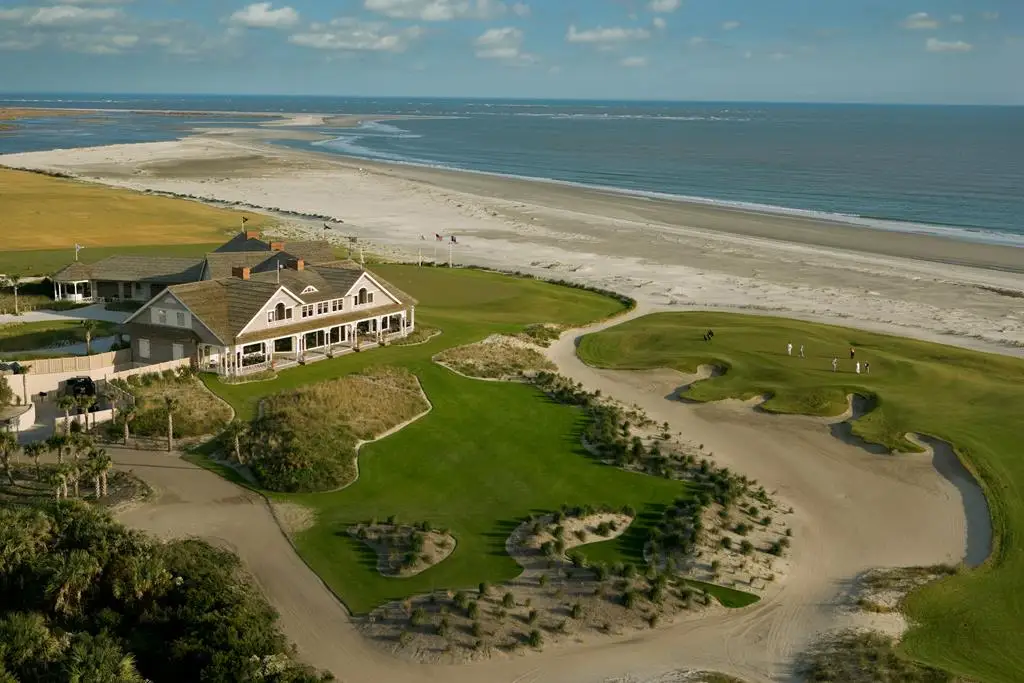
Golf Resorts Stay Plans: Hospitality Yield & TCP Manual
Evaluating the structural architecture of high-end leisure hospitality requires looking past consumer marketing and examining the operational and financial frameworks that govern golf-centric travel. For properties operating at the intersection of luxury lodging and athletic facility management, the monetization of course access and room inventory is rarely a matter of simple nightly rates. Instead, the industry relies on structured booking frameworks that balance tee-time utilization with room-night yield. Navigating these systems requires an understanding of how resorts segment their inventory, price their amenities, and manage the competing demands of member communities and transient guests.
The intersection of hospitality analytics and course logistics forms the foundation of modern golf tourism. A resort must maintain a delicate equilibrium: filling its beds during off-peak weekdays while ensuring that the primary golf course does not suffer from operational bottlenecks or excessive turf wear. For the traveler, corporate planner, or golf group coordinator, the challenge lies in deciphering these structured offerings to maximize access, mitigate hidden fees, and align the itinerary with the skill level and expectations of the participants. This analysis provides an exhaustive evaluation of the mechanisms, economic models, and operational realities that define the contemporary golf resort ecosystem.
To truly understand how these properties function, one must look at the structural mechanics of room-and-tee-time integration. The relationship between a resort’s front desk and its golf pro shop is often governed by complex yield-management software that adjusts pricing based on historical data, weather forecasts, and real-time occupancy. This structural integration dictates everything from peak morning tee-time availability to the specific dining credits bundled into a guest’s itinerary. By examining these dynamics, we can move away from surface-level travel tips and focus on the structural frameworks that drive value and operational efficiency for both the property and the consumer.
Understanding “golf resort stay plans”

The phrase golf resorts stay plans refers to the structured contractual and operational packages that combine lodging, course access, and ancillary resort services into a unified purchasing mechanism. Far from being a mere marketing bundle, these plans serve as institutional yield-management tools designed to stabilize revenue across volatile seasonal shifts and maximize the Total Revenue Per Available Room (TRevPAR). Understanding these plans requires analyzing how a resort unbundles its baseline costs—such as green fees, cart rentals, forecaddie allocations, practice facility access, and food and beverage credits—and repackages them to target specific buyer personas, from corporate retreat planners to avid amateur groups.
A frequent point of friction in the industry is the oversimplification of what a “plan” actually guarantees. Amateur travelers often assume that purchasing a comprehensive golf package grants unfettered access to the championship course at any time of day. In reality, operational constraints often relegate package holders to specific afternoon fields, known as twilight blocks, or restrict them to secondary resort courses unless a premium tier is selected. This misunderstanding stems from a failure to recognize that a resort’s primary allegiance is often to its private membership base or its high-paying, unbundled daily-fee players who occupy premium morning tee times.
Furthermore, the financial mechanics of these plans are frequently misconstrued. While consumers look at bundled packages through the lens of cost savings, resorts view them as a mechanism to capture advanced capital and guarantee utilization of perishable inventory—specifically, unplayed tee times and empty room nights. If a tee time passes unfilled, that revenue is gone forever. By bundling that time with a room night months in advance, the resort locks in a baseline margin, transferring the risk of inclement weather or scheduling cancellations onto the consumer, often through strict, non-refundable deposit structures.
Historical and Systemic Evolution
The architecture of golf-centric hospitality has evolved alongside broader transformations in real estate development, commercial aviation, and wealth distribution. In the early to mid-twentieth century, American golf resorts operated primarily on a classic European plan or American plan model, where elite destinations catered to affluent patrons who stayed for weeks at a time. These historic properties treated golf as an amenity rather than a primary driver of real estate value. The courses were designed for leisurely walks, walking caddies were mandatory, and the hospitality component was distinct from the sporting operation.
The landscape shifted dramatically during the real estate booms of the 1970s and 1980s, when the “golf course community” model became a dominant vehicle for suburban and resort land development. Developers realized that framing a residential master plan around a signature championship course could increase land values by 30% to 50%. To sustain these expansive properties before residential build-outs were complete, developers built resort hotels. This gave rise to the modern integrated resort plan, where the golf course had to serve a dual purpose: acting as an exclusive amenity for property owners while generating cash flow from transient resort guests.
The aftermath of the 2008 financial crisis forced a rigorous reassessment of this model. The oversupply of golf courses, combined with shifting demographic interests, led to a period of consolidation. Properties could no longer rely on unmanaged demand; they had to adopt data-driven yield management systems borrowed from the airline industry. This era introduced precise tracking of rounds per stall, minutes per hole, and food and beverage capture rates per golfer. Consequently, structured stay plans evolved from simple room-and-round discounts into highly segmented, dynamic arrangements that fluctuate in price based on real-time historical demand data.
Conceptual Frameworks and Mental Models
To analyze or select an institutional-grade golf itinerary, one can deploy several foundational mental models rooted in microeconomics and operational analysis.
The Perishable Inventory Framework
Tee times and room nights share an identical economic trait: they are highly perishable assets. A tee time at 8:30 AM on a Thursday has zero value at 8:31 AM. Resorts use stay plans to solve this challenge by using high-demand assets—such as a Saturday morning tee time—to pull low-demand assets through the sales funnel, such as a Sunday or Monday night room stay.
The Capacity Constrained Yield Model
A golf course has a hard ceiling on daily capacity. Assuming four-minute intervals between groups, a standard course can accommodate a maximum of approximately 140 to 160 players per day under optimal daylight conditions. Because capacity is capped, profitability is driven by maximizing the revenue generated by each slot. Stay plans allow resorts to filter out low-yield local players in favor of high-yield destination guests who will spend money on lodging, spa services, and fine dining.
The Total Cost of Play (TCP) Model
When evaluating a stay plan, experienced organizers do not look at the face value of the package. Instead, they calculate the Total Cost of Play using a specific formula:
Where: This
-
is the baseline package cost. It
-
is mandatory to pay surcharges (resort fees, tournament fees). It
-
is mandatory to include caddie or cart gratuities.
-
is ancillary food, beverage, and retail spend.
-
is the total number of eighteen-hole rounds completed.
This model reveals the actual economic efficiency of the plan, stripping away marketing language to expose the true cost per round.
Key Categories and Operational Variations
The structure of a golf resort stay plan varies based on the property’s business model, geographical location, and target audience. These plans generally fall into five primary operational categories, each presenting distinct trade-offs regarding cost, flexibility, and course access.
Unlimited Play Models
These plans appeal to dedicated golfers by promising unlimited access to resort courses for a fixed daily rate. However, “unlimited” is governed by operational constraints. The resort typically guarantees only the first eighteen holes of the day via advanced booking. Any subsequent rounds—the replay rounds—must be booked on a space-available basis after the first round is completed. During peak seasons, when fields are full, the probability of securing a second eighteen-hole slot before twilight is low.
Tournament and Group-Siloed Plans
Designed for corporate outings or amateur competitive associations, these frameworks prioritize logistical coordination over individual flexibility. They bundle tournament scoring services, dedicated shotgun starts, customized merchandise credits, and private banquet dining. The trade-off is a loss of individual autonomy; participants must play within assigned blocks and follow a rigid schedule that leaves little room for off-course exploration.
Stay-and-Play Baseline Bundles
The most common consumer framework pairs one night of lodging with one round of golf. While straightforward, these plans are highly sensitive to seasonal and daily fluctuations. A standard stay-and-play package booked on a weekend often carries significant room surcharges and limited morning tee-time availability, forcing package holders into less desirable afternoon slots where finishing before sunset becomes a race against time.
Ultra-Premium and All-Inclusive Enclaves
Found at top-tier, bucket-list destinations, these plans remove on-site financial transactions by bundling lodging, all rounds across multiple championship courses, private caddies, premium dining, and top-shelf beverages. These plans provide exceptional access and convenience, but require a high upfront capital investment, regardless of whether the guest uses every amenity.
Off-Peak and Shoulder-Season Variants
These plans are designed to maintain operational cash flow during periods of suboptimal weather or seasonal transitions, such as desert summer heat or northern autumn freezes. While they offer substantial discounts and excellent tee-time availability, guests must contend with challenging course conditions, such as recent aeration, overseeding transitions, or extreme temperatures.
Decision Logic for Plan Selection
Choosing the right framework requires analyzing group dynamics, skill levels, and priorities. If the primary goal is maximizing time on the course, an Unlimited Play model is highly effective, provided the group accepts the risk of afternoon standby waits.
Conversely, if the trip includes non-golfers or requires specific dining and business amenities, a structured Tournament/Group or Ultra-Premium model is more appropriate. This ensures that tee times do not conflict with group events and that the off-course experience matches the on-course investment.
Detailed Real-World Scenarios
Evaluating how these frameworks perform under real-world operational pressures reveals the hidden vulnerabilities in generic planning models.
The Multi-Course Corporate Retreat
A financial services firm books a three-night corporate retreat for forty clients at a premier multi-course coastal resort. They select a premium tournament stay plan that includes guaranteed morning tee times on the flagship championship course.
-
Operational Challenge: On day three, a severe storm system drops two inches of rain, saturating the turf and forcing the resort to implement “cart paths only” restrictions on the flagship course, which slows the pace of play by an estimated 45 minutes per round.
-
Failure Mode: The extended pace of play throws off the afternoon schedule, causing the group to miss their prepaid, non-refundable closing awards banquet.
-
Second-Order Effects: The resort must choose between delaying the general public field or forcing the corporate group to truncate their round at the 14th hole, leading to contractual disputes over unfulfilled package components.
The Shoulder-Season Golf Pilgrimage
Four avid amateur golfers book an off-peak “Unlimited Play” package in the desert Southwest during early September, lured by a 50% discount compared to winter rates.
-
Operational Challenge: Temperatures reach 108°F by noon, causing severe physical fatigue and forcing the maintenance crew to heavily water the greens during mid-day hours to prevent turf death.
-
Failure Mode: The players complete their guaranteed morning round but find the course virtually unplayable for their afternoon replay due to standing water from emergency irrigation and extreme heat indices. One player suffers mild heat exhaustion.
-
Second-Order Effects: The group spends their afternoon in the resort lounge, accumulating unintended food and beverage charges that erode the financial savings of the off-peak package rate.
The Historic Single-Course Bottleneck
A private club member organizes an eight-player trip to a historic, single-course mountain resort operating under a standard stay-and-play bundle.
-
Operational Challenge: The resort’s private membership has blocked out all tee times between 7:30 AM and 11:00 AM for an internal club championship.
-
Failure Mode: The resort assigns the resort package guests a 1:45 PM tee time. Because it is late autumn, daylight ends at 5:15 PM.
-
Second-Order Effects: The group cannot complete more than thirteen holes before dark. Because the resort technically provided a tee time, the front desk refused a partial refund, citing the package’s terms and conditions regarding daylight availability.
The Out-of-Region Destination Multi-Accommodation Setup
A regional amateur golf association coordinates a 60-player tournament across two distinct resort properties that share a golf facility management agreement.
-
Operational Challenge: Miscommunications between the two distinct hotel property management systems (PMS) result in unequal allocation of premium morning tee times between the two lodging cohorts.
-
Failure Mode: Cohort A receives optimal morning slots, while Cohort B is pushed to late afternoon, dividing the field and disrupting the tournament’s competitive fairness.
-
Second-Order Effects: The tournament committee must scramble to implement an adjusted scoring system, while the resort faces logistical strain trying to manage transport shuttles for two groups on completely different schedules.
Planning, Cost, and Resource Dynamics
The actual financial cost of a golf resort stay plan extends far beyond the published per-person rate. A realistic assessment requires mapping both direct line items and variable, indirect operational expenses that arise during a multi-day itinerary.
Capital Allocation Ranges
To illustrate the financial spectrum of these frameworks, the following table details estimated resource requirements across three distinct market tiers.
The Mechanics of Opportunity Cost
A critical variable in financial planning is the calculation of opportunity cost regarding time. For instance, selecting a lower-tier plan that requires driving to an off-site affiliate course can add 90 minutes of daily travel time.
For a high-earning corporate group, the billable hour equivalent of that lost time can far exceed the premium required to stay on-site at a Tier 1 property. Similarly, extended transit times reduce the windows available for business meetings, networking events, or restorative downtime, diminishing the overall value of the trip.
Tools, Strategies, and Support Systems
Successfully managing a golf resort itinerary requires using specific tools and strategies to mitigate operational friction and ensure seamless execution.
Logistics Management and Club Shipping Services
One of the most common friction points in golf travel is luggage transit. Standard commercial flights expose high-end golf equipment to TSA delays, baggage loss, and physical damage. Utilizing dedicated door-to-door club shipping services bypasses airport baggage claims and ensures that equipment arrives directly at the resort pro shop forty-eight hours before the first tee time. This strategy also eliminates the need for large rental vehicles to transport oversized travel bags.
Digital Tee-Time Optimization Platforms
Many premium resorts now integrate their booking engines with third-party inventory aggregators and proprietary membership apps. Savvy group coordinators can use these tools to monitor real-time cancellations, allowing them to adjust their fields or swap late-afternoon slots for preferred morning times without incurring manual administrative fees from the resort’s reservation desk.
Advanced Meteorological Forecasting Architecture
Standard consumer weather applications lack the granularity required to guide operational decisions on a golf course. Utilizing micro-local radar services provides hole-by-hole lightning tracking and soil saturation estimates. This data allows group leaders to anticipate cart path restrictions or frost delays, giving them a head start when coordinating with the resort’s tournament director to adjust schedules.
Professional Field-Scoring Software
For large groups or corporate outings, managing leaderboards manually is inefficient and prone to errors. Implementing dedicated digital scoring platforms allows participants to log scores via smartphones. This generates live leaderboards displayed on cart-mounted screens and clubhouse monitors, enhancing the competitive experience and automating complex handicap calculations across diverse skill levels.
Risk Landscape and Failure Modes
The execution of a multi-day golf itinerary is vulnerable to various operational risks that can quickly derail the guest experience. Identifying these failure modes in advance allows organizers to build appropriate safeguards into their travel strategy.
Agronomic Disruption and Maintenance Calendars
The most frustrating experience for a golf traveler involves arriving at a premium destination only to find the greens recently aerated—a process that punches holes in the turf and fills them with sand to ensure long-term soil health. For two to three weeks post-aeration, this maintenance schedule significantly compromises putting surfaces. Resorts rarely advertise these maintenance schedules on their main booking pages, meaning planners must directly interview the course superintendent before signing lodging contracts.
Systemic Pace-of-Play Collapse
When a resort maximizes its room capacity, its golf courses often suffer from severe congestion. If a course allows four-person groups of high-handicap players to tee off at tight, seven-minute intervals without strict ranger enforcement, the pace of play can quickly stretch past five and a half hours. This delay ruins the athletic experience, causes missed dinner reservations, and prevents golfers from utilizing afternoon replay rounds included in their stay plans.
Contractual Vulnerability and Force Majeure Clauses
Standard travel insurance policies often fail to cover golf-specific losses, such as when localized flooding or frost shuts down a course while the hotel remains fully operational. Because the lodging component functions, the resort legally retains the room revenue, leaving the traveler with no recourse. Planners must negotiate specific golf-performance clauses in their contracts, stipulating that if the primary course is unplayable, the guest retains the right to cancel or rebook the entire package without penalty.
Governance, Maintenance, and Long-Term Adaptation
For organizations, corporate travel desks, or golf societies that orchestrate annual trips, managing golf resort arrangements requires a structured governance process. It cannot be treated as a series of disconnected, one-off purchases. Instead, it must be approached as an ongoing lifestyle asset that requires regular evaluation, financial auditing, and adjustment to adapt to changing market dynamics.
To maintain an effective multi-year strategy, planners should implement a structured review process based on three core operational pillars:
1. Agronomic and Facility Audits
Establish a formal timeline to verify course maintenance schedules at least nine months before arrival. This includes confirming specific dates for spring and autumn aeration, overseeding transitions, and planned renovations to bunkers or clubhouse facilities that could disrupt the guest experience.
2. Contractual and Financial Safeguards
Maintain a centralized repository of all resort contracts, paying close attention to attrition clauses, deposit schedules, and force majeure language. Ensure that every stay plan contract includes specific provisions for partial refunds or weather-related credits if the golf facilities become compromised during the stay.
3. Post-Trip Yield Performance Reviews
After completing an itinerary, conduct a rigorous assessment of the total expenditures against the actual value delivered. Calculate the Total Cost of Play () and review guest feedback regarding the pace of play, dining quality, and overall service execution to guide future destination selections.
Institutional Readiness Checklist
The following multi-layered checklist provides an operational framework for evaluating and executing a golf resort stay plan contract.
-
Agronomic Verification
-
Confirm the exact dates for spring and autumn greens aeration across all resort courses.
-
Verify the overseeding schedule and subsequent cart path restrictions for desert properties.
-
Assess the historical impact of winterkill or summer heat wilt on the putting surfaces.
-
-
Tee-Time Guarantee Matrix
-
Secure written confirmation of exact morning tee-time blocks rather than vague promises of “preferred access.”
-
Clarify the specific booking window and priority status for afternoon replay rounds.
-
Identify any private member tournaments or corporate outings that overlap with the group’s itinerary.
-
-
Financial and Attrition Compliance
-
Audit the contract for hidden surcharges, including mandatory caddie base fees, cart rentals, and resort fees.
-
Define the exact attrition schedule, noting the dates when room blocks can be reduced without financial penalty.
-
Establish a clear refund mechanism for weather-related course closures or partial rounds.
-
-
Logistical Infrastructure Staging
-
Coordinate direct shipping arrivals with the resort bag room manager forty-eight hours before check-in.
-
Confirm the availability of dedicated transport shuttles between separate lodging sites and the pro shop.
-
Set up the digital tournament scoring software with the resort’s head golf professional two weeks before arrival.
-
Measurement, Tracking, and Evaluation
An optimized golf travel strategy relies on clear data and metrics. To objectively evaluate the performance of a stay plan, organizers must track key performance indicators (KPIs) that balance quantitative financial costs with qualitative experiential outcomes.
Leading vs. Lagging Indicators
-
Leading Indicators: Metrics compiled before the trip begins, used to predict operational success. Examples include the Tee-Time Field Density Score (the ratio of open slots to total capacity) and the Superintendent’s Turf Saturation Index.
-
Lagging Indicators: Metrics calculated after completing the itinerary, reflecting the actual efficiency of the execution. Key metrics include the Total Cost of Play (), the Average Pace of Round (measured in hours and minutes), and the Ancillary Expense Capture Rate.
Quantitative Performance Matrix
To systematically track these variables, planners can maintain a standardized performance ledger. The following example illustrates how an organization might document and analyze performance data across different annual trips.
By consistently compiling this data, travel planners can move past subjective marketing reviews and select properties based on clear, verifiable metrics that optimize both budget allocation and on-course performance.
Common Misconceptions and Oversimplifications
The golf hospitality market is filled with persistent myths that often lead to poor planning and unexpected expenses. Debunking these misconceptions is essential for establishing realistic expectations.
“Unlimited Golf” Always Means Free, Unrestricted Play
As previously noted, unlimited packages are strictly bound by daily course capacity. A resort is legally obligated to provide only the initial round booked in your package contract.
Any subsequent standby play is secondary to the resort’s primary daily-fee and member fields. In peak seasons, an unlimited package rarely translates into more than eighteen holes per day.
All On-Site Accommodations Provide Equal Course Access
Many large-scale properties feature multiple lodging tiers, ranging from standard hotel rooms to private fairway villas.
Believing that any room booking unlocks identical golf privileges is an operational error. Resorts frequently reserve premium tee-time windows exclusively for guests staying in their highest-tier villas or club-level accommodations.
Mandatory Caddie Fees Are Included in the Base Package Price
While a stay plan may proudly advertise “golf included,” it often unbundles caddie services.
At premier destinations, caddies or forecaddies are frequently mandatory, and their base fees and gratuities must be paid directly in cash at the pro shop or on the bag drop veranda, adding hundreds of dollars to the trip’s final cost.
Replay Rounds Are Always Free or have a nominal cost
Many travelers assume that if they want to play a second round on the same day, it will be included automatically or carry a minimal charge.
In reality, unless explicitly stated in an ultra-premium package, resorts routinely charge substantial “cart fees” or “replay surcharges” for a second round, which can easily run from $50 to $150+ per person.
Rain-Out Guarantees Automatically Provide Cash Refunds
A standard “rain check” policy rarely results in money returned to your credit card.
Instead, most golf resort contracts state that if a round is canceled due to weather, the guest will receive a non-transferable resort credit voucher valid for future play, typically expiring within twelve months.
Summer Slashes Mean identical Experiences at Half the Cost.
While desert and tropical resorts cut rates dramatically during summer months, the on-course experience changes fundamentally.
Extreme heat indices can alter turf conditions, necessitate mid-day maintenance watering, and limit a player’s physical endurance, making it difficult to complete even a single eighteen-hole round comfortably.
Ethical, Practical, and Contextual Considerations
The long-term sustainability of the golf resort industry faces significant environmental and resource challenges, particularly regarding water management and land use. High-end courses require millions of gallons of water daily to maintain pristine green fairways, often in arid regions experiencing prolonged droughts. This creates growing operational tension between luxury leisure tourism and local municipal water conservation mandates.
To address these challenges, leading resorts are adopting advanced sustainability frameworks. These initiatives include transitioning non-playing areas to native desert or prairie vegetation, utilizing recycled greywater for all course irrigation, and introducing drought-tolerant turfgrass hybrids like warm-season paspalum.
For the conscious traveler and corporate planner, evaluating a resort’s environmental practices is becoming a vital part of the destination selection process, ensuring that the luxury experience does not come at an unacceptable cost to the local ecosystem.
Synthesis and Long-Term Outlook
The architecture of golf resort stay plans is fundamentally an exercise in balancing perishable hospitality assets with finite course capacity. For the individual traveler or corporate group coordinator, successfully navigating this environment requires looking past glossy marketing packages and carefully analyzing the underlying operational and contractual mechanics. True value is not found by chasing the lowest published rate, but by securing specific, written guarantees regarding tee-time priority, agronomic conditions, and comprehensive cost transparency.
Looking ahead, the industry is poised for further data-driven evolution. The integration of real-time predictive analytics, mobile app staging, and customizable, unbundled booking platforms will continue to change how resorts price and allocate their rounds and rooms.
Those who approach planning with a clear understanding of yield-management dynamics, total cost models, and rigorous logistical management will consistently secure superior itineraries. Ultimately, viewing golf travel through an analytical lens ensures that your investment yields an exceptional athletic and hospitality experience.