
How to Avoid Lost Luggage Risks: Systematic Guide
The modern commercial aviation network operates as a highly complex logistics system, moving millions of passengers and their baggage across global transit corridors daily. While passenger boarding, flight tracking, and air traffic control rely on advanced automated protocols, the underlying baggage handling infrastructure remains a combination of automated technology and physical labor. This reliance on fragmented legacy systems, varying airport ground handling standards, and tight connection windows creates persistent vulnerabilities that expose travelers to baggage loss.
For most passengers, the check-in counter marks the end of their oversight. Beyond the conveyor belt lies an opaque, multi-staged environment managed by distinct entities: airlines, third-party ground handling companies, airport authorities, and national security screening agencies. Because responsibility is split across so many groups, a breakdown at any single point can cause a bag to miss its flight, end up on the wrong aircraft, or disappear into a backlog of untracked inventory.
Managing these risks requires moving away from reactive solutions, such as buying insurance or relying entirely on airline tracking apps. Instead, travelers need a systematic approach that views baggage transit as a continuous chain of custody. By understanding where these systems are most fragile and using data-driven packing and scheduling strategies, passengers can significantly reduce their exposure to baggage loss.
This analysis provides a comprehensive framework for navigating and securing the baggage lifecycle. Shifting the focus from simple convenience to systemic risk management allows travelers to protect their belongings, even when navigating congested global hubs or tight flight connections.
Understanding “how to avoid lost luggage risks”
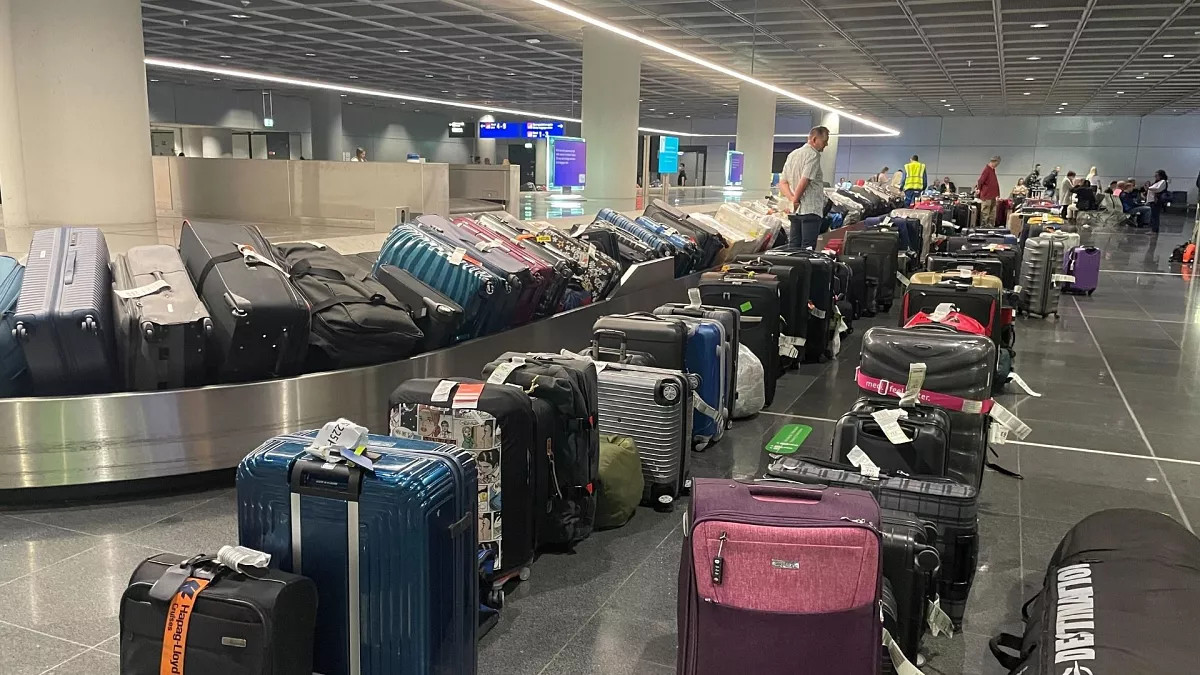
A frequent mistake in travel risk management is treating baggage handling like a simple point-to-point courier service. This misunderstanding leads to flawed strategies. A checked bag is part of a high-speed, automated sorting network where barcode readability, mechanical routing, and strict airport timelines dictate whether it arrives on time.
When travelers look into how to avoid lost luggage risks, they often focus on visible accessories, like colorful luggage straps or standard name tags. This approach targets the wrong issues. A brightly colored strap does not fix an unreadable automated baggage barcode, nor does a generic leather tag stop a bag from getting stuck in a jammed security conveyor belt.
True risk reduction relies on optimizing efficiency and eliminating scanning errors. This means separating factors within the traveler’s control from systemic airport failures. For example, leaving old barcode stickers on a suitcase does not just confuse automated sorting systems; it forces laser scanners to reject the bag for manual processing, causing it to miss tight connection windows.
By stripping old tracking data and using clear, flat surfaces for new baggage tags, travelers can ensure that automated laser arrays scan their bags accurately, preventing routing errors.
Travelers must also distinguish between mechanical failures and operational errors. A passenger cannot control a broken airport belt system or a sudden ground handler strike. They can, however, optimize their flight choices to minimize these risks.
Reducing baggage risk requires analyzing layover times, checking whether connecting airlines share baggage agreements, and reviewing hub infrastructure. This preparation allows travelers to build reliable itineraries that protect their belongings from systemic delays.
Deep Contextual Background of Automated Baggage Logistics
The economic and operational model of modern baggage handling was shaped by specific historical trends that are now colliding with high passenger volumes and labor shortages. During the expansion of commercial aviation in the late 1990s and early 2000s, airports invested heavily in automated baggage handling systems (BHS). These massive underground networks use high-speed conveyors, laser scanners, and automated sorting bins to move bags from check-in counters to aircraft loading zones.
This logistical model relied on three main assumptions:
-
Abundant, low-cost ground handling labor for final manual loading.
-
Standardization of linear barcode tags across all global airlines.
-
Predictable, structured flight schedules with ample buffer times between connecting flights.
Over the past decade, these foundational assumptions have broken down. The deregulation of ground handling services has squeezed profit margins, leading to high turnover and chronic staffing shortages among ramp workers. At the same time, airlines have adopted ultra-efficient scheduling models that shorten turn times around the gate, leaving ground crews with narrow windows to transfer bags between connecting aircraft.
Technological challenges have added to these operational pressures. While the International Air Transport Association (IATA) introduced Resolution 753 to force airlines to track bags at key points—such as check-in, loading, transfer, and arrival—implementation remains uneven. Many secondary airports still rely on manual barcode scanning, which is prone to human error and easily disrupted by scuffed tags or poor lighting.
These converging pressures mean travelers can no longer assume that checking a bag guarantees its arrival. Mitigating modern transit risks requires a proactive approach that accounts for short connection windows, aging airport infrastructure, and the varying logistical capabilities of different global hubs.
Conceptual Frameworks and Mental Models
To systematically protect checked baggage without altering the basic rules of commercial aviation, travelers can use several core logistics frameworks.
1. The Critical Path Transfer Window (CPTW)
This model evaluates the safety of a connection window by comparing the minimum legal connection time against the physical limits of airport ground operations.
-
Application: When booking flights, calculating the CPTW helps identify high-risk connections. If an airport requires 60 minutes for a bag to move between terminals, but the schedule only provides a 45-minute window, the bag will likely be left behind, regardless of the airline’s tracking capabilities.
-
Boundary Condition: This model breaks down during severe weather or unexpected air traffic delays, which completely erase calculated safety buffers.
2. The Optical Cleanliness Index (OCI)
This framework treats the exterior of a suitcase as a data surface, where any visual clutter directly reduces the accuracy of automated sorting systems.
-
Application: Travelers should treat their luggage like a clean data asset. Removing all past destination stickers, tucking in loose straps, and ensuring the primary airline tag sits flat prevents laser scanners from misreading data or diverting the bag to manual sort bins.
-
Boundary Condition: This index cannot protect against internal structural issues, such as a detached internal tracking chip or an unreadable barcode generated by a faulty airline printer.
3. The Redundant Node Tracking Protocol (RNTP)
This risk-management framework uses independent tracking layers to monitor luggage, ensuring visibility even if the airline’s internal systems fail.
-
Application: By placing a Bluetooth tracker inside the bag while keeping a clear physical tag on the outside, travelers create a multi-layered tracking system. If the airline loses the bag’s digital manifest, the passenger can still locate it using an independent data network.
-
Boundary Condition: This protocol relies heavily on the availability of crowdsourced Bluetooth networks and cellular data. It offers limited tracking visibility in remote, unintegrated regional airports.
Key Categories of Mishandled Baggage and Systemic Trade-Offs
Reducing baggage risks requires a clear understanding of where and why failures happen. The table below outlines the primary causes of mishandled baggage, their relative operational impact, key drivers, and the trade-offs of different mitigation strategies.
Luggage Vulnerability Matrix
Decision Logic for Baggage Management
When planning an itinerary and preparing luggage, travelers can use a structured evaluation process to determine whether to check a bag or rely entirely on carry-on options:
-
Assess Gear Requirements: Determine whether specialized gear, liquids, or trip length requires checking a full-sized suitcase. If everything fits in a standard overhead bag, choose carry-on transit to completely avoid checked baggage risks.
-
Evaluate Connection Windows: If checking a bag is necessary, audit the layover times. Layovers under 75 minutes significantly increase the risk of a bag missing the connecting flight.
-
Optimize the Itinerary: If the layover is too short, look for a different flight path with a larger time buffer, or choose a direct route to remove the transfer risk entirely.
-
Apply Security Protocols: When a checked bag is unavoidable on a complex route, secure it using redundant tracking devices and clean the exterior to ensure high barcode readability.
Detailed Real-World Transit Scenarios
Navigating Tight International-to-Domestic Transfers
A passenger traveled from London Heathrow to Chicago O’Hare, with a 65-minute domestic connection to Denver on a separate airline.
-
The Strategy: The passenger split their belongings, packing critical electronics and medication into a carry-on, while securing the checked suitcase with an internal Bluetooth tracker and a bright, clear physical address tag.
-
Decision Points: The traveler had to choose between paying extra for a direct flight or sticking with a cheaper, tight connection. They chose the connection but minimized risk by avoiding separate ticket bookings, ensuring the airlines shared a single baggage agreement.
-
Failure Modes: A weather delay on the Atlantic leg cut the actual connection window to 30 minutes. While the passenger made the flight, the ground crew could not move the bag between terminals fast enough.
-
Second-Order Effects: Because the passenger used an internal Bluetooth tracker, they located the bag at O’Hare Terminal 5 while sitting in Denver. This allowed them to file an accurate claim immediately, bypassing long airport customer service lines.
High-Volume Holiday Travel Through Congested Hubs
A family of four checked four separate suitcases for a multi-city winter trip through a highly congested hub during a severe snowstorm.
-
The Strategy: Before checking in, the family removed all old barcodes, applied fresh, high-contrast labels to flat sections of the hard-sided bags, and took photos of each suitcase’s exterior.
-
Decision Points: The family had to decide whether to check their heavy winter coats or carry them on board. They chose to wear the coats to save checked luggage space and reduce overall bag weight.
-
Failure Modes: Two bags were routed to a manual sorting bin because the printed airline tags were smudged by an older, unmaintained ticket printer at check-in.
-
Second-Order Effects: The exterior photos allowed the baggage agent to quickly identify the missing suitcases in the overflow holding area. The clean, hard-sided design also prevented the bags from snagging on conveyor belts during system backlogs.
Multiple Stops on Non-Alliance Airlines
A business traveler booked a multi-segment trip across Africa and Europe using three different airlines that did not belong to a single global alliance.
-
The Strategy: At each intermediate check-in desk, the traveler asked the agent to confirm that the bag’s interline tag showed the final destination code, rather than just the next airport stop.
-
Decision Points: The traveler had to choose between checking the bag all the way through or retrieving and re-checking it at every stop. They chose to re-check the bag at the major European hub to ensure it was properly scanned into the next airline’s system.
-
Failure Modes: The second airline failed to scan the bag into its system during the transition, causing the bag to sit on the tarmac for 12 hours without appearing on any flight manifest.
-
Second-Order Effects: Because the traveler chose a longer, four-hour layover for the re-check segment, they had enough time to track down the bag manually at the cargo desk before their flight departed.
Small Regional Aircraft with Strict Cargo Space Limits
A group of photographers traveled to a remote location on a regional commuter flight with strict weight and space limits for checked baggage.
-
The Strategy: The team divided their gear into small, hard-sided cases weighing under 50 pounds each, rather than packing everything into a few massive, oversized gear duffels.
-
Decision Points: The team had to decide whether to ship their sensitive equipment ahead via a cargo service or check it as baggage on their flight. They chose to check it,t but split identical gear across different cases.
-
Failure Modes: Due to high summer temperatures that reduced the aircraft’s lift capacity, the ramp crew had to leave 400 pounds of checked baggage behind on the tarmac.
-
Second-Order Effects: Because the team split their essential gear across multiple small cases, every photographer kept at least one working camera and lens kit, allowing them to start their project on time while the remaining cases caught the next flight.
Planning, Cost, and Resource Dynamics
Investment Profiles and Risk Reduction Outcomes
Hidden Operational Dependencies
To minimize luggage risks effectively, travelers must look beyond immediate costs and account for systemic airport rules and logistics.
-
Security Screening Constraints: When airport security teams spot an unidentifiable item inside a bag, they pull it off the automated line for a manual check. If the suitcase is locked with a non-TSA-approved lock, screeners will cut it open, which damages the zippers and increases the risk of items falling out on conveyor belts.
-
The Late-Check-In Deficit: Checking a bag close to the flight’s departure window creates an operational hazard. Even if a traveler makes it through security quickly, their bag must travel through miles of underground conveyor belts. A bag checked 45 minutes before departure often misses the automated sort window, causing it to be left behind for the next flight.
-
Interline Agreement Limitations: Booking separate flights across different airlines to save money can break the luggage chain of custody. If the airlines do not share an interline baggage agreement, the first carrier cannot tag the bag to the final destination, forcing the passenger to clear customs, retrieve the bag, and re-check it for each segment.
Tools, Strategies, and Support Systems
To maintain reliable luggage visibility across complex itineraries, travelers can use a variety of specialized tracking tools and packing strategies.
1. High-Contrast, Matte-Finish Destination Labels
Traditional thermal labels printed at check-in desks can smudge or crease easily. Applying a high-contrast, matte-finish address label directly to a flat surface on a suitcase provides a reliable backup for optical scanner arrays if the primary airline tag becomes unreadable.
2. Embedded Smart Tracking Tag Networks
Placing smart tracking tags inside luggage allows travelers to monitor their bags independently using global crowdsourced networks. This independent data helps passengers verify whether their luggage made it onto the aircraft before the cabin doors close.
3. Integrated TSA-Approved Locking Systems
Suitcases with built-in, TSA-approved combination locks protect belongings from spilling if zippers fail on high-speed conveyor belts, while allowing security screeners to inspect the contents without destroying the bag.
4. Digital Asset Inventories and Image Logs
Taking clear photos of the outside of a suitcase and its contents before checking it creates a definitive asset record. This documentation helps baggage agents identify missing bags in overflow rooms and provides proof for insurance claims if items are lost or damaged.
5. Durable, Streamlined Hard-Sided Suitcases
Soft duffel bags, external pockets, and hanging straps frequently catch on the dividers of automated sorting networks. Switching to streamlined, hard-sided polycarbonate luggage eliminates these catch points, helping bags move smoothly through complex sorting machinery.
6. Airline Alliance and Interline Booking Systems
Booking entire multi-stop trips through a single airline alliance ensures that all segments use compatible baggage tracking software, reducing the risk of a bag disappearing during transfers between different carriers.
Risk Landscape and Compounding Failure Modes
The table below outlines the primary operational risks associated with checked baggage systems, along with warning signs and prevention plans.
Luggage Risk and Systemic Vulnerability Matrix
Governance, Maintenance, and Long-Term Adaptation
To maintain high luggage security across years of travel, passengers should build a structured checklist for managing their gear. Luggage assets degrade with use, and tracking tools need regular updates to perform reliably.
Pre-Flight Preparation Cadence
Travelers should follow three clear inspection steps to keep their luggage and tracking systems working optimally:
-
Before Booking: Check layover times, verify terminal layouts, and confirm that all airlines on the itinerary share a single baggage tracking agreement.
-
24 Hours Before Departure: Replace old tracking batteries, update digital contact info on luggage tags, and take clear photos of the suitcase’s interior and exterior.
-
At the Check-In Desk: Verify that the destination codes printed on the airline tag match the final destination on the itinerary, and make sure the tag is applied flat.
Long-Term Luggage Maintenance Checklist
Mechanical and Structural Integrity
-
Inspect wheels and axle bearings after every four trips to remove lint and debris that can cause dragging.
-
Test all exterior zippers under load to ensure teeth align properly and won’t split on conveyor belts.
-
Check the structural rivets and telescoping handles of hard-sided suitcases for stress fractures.
-
Wipe down the outside of suitcases to remove old adhesive residue that could catch on sorting machinery.
Tracking and Digital Systems
-
Test internal tracking tag batteries before long trips, replacing them if they fall below 30% power.
-
Update phone numbers, emails, and addresses on all digital and physical tags twice a year.
-
Verify that airline tracking apps are updated to the latest version to ensure real-time scanning notifications work.
-
Check that tracking tag location sharing is set to high accuracy within your phone’s operating system.
Packing and Content Security
-
Review the placement of dense items, ensuring they sit flat and won’t trigger manual security checks.
-
Verify that no prohibited items, lithium batteries, or high-value documents are packed in checked bags.
-
Use internal compression straps to secure the bag’s contents and prevent weight shifts that could burst zippers.
-
Check that all personal identification tags are covered or shielded to protect your privacy on the road.
Measurement, Tracking, and Evaluation Metrics
Building a reliable travel routine requires tracking key performance indicators across every trip. Relying purely on whether a bag arrives can hide close calls, like a bag that barely made a flight due to a short layover.
Balanced Evaluation Indicators
-
Tracker Update Frequency (Leading): Monitoring how often a tracking tag updates during transitions reveals where airport blind spots exist, helping travelers identify high-risk transfer hubs.
-
Luggage Transit Buffer Margin (Leading): This tracks the time between a bag arriving at the loading gate and the aircraft’s departure. A consistently narrow margin indicates that future flights on that route carry a higher risk of lost luggage.
-
Annual Mishandling Rate per Segment (Lagging): Calculated by dividing total baggage delays by the number of flights taken each year. This helps travelers evaluate whether specific airlines or hubs are becoming unreliable.
-
Claim Resolution Duration (Lagging): Tracks the days required for an airline to return a delayed bag or settle a claim. This data helps travelers evaluate which carriers provide better customer support during disruptions.
Standard Luggage Documentation Forms
To speed up recovery if a bag is lost, travelers should keep pre-filled digital asset forms on hand. Below are three examples of standard tracking documents that help expedite claims with airline baggage agents.
- Baggage Exterior Asset Profile
- High-Value Internal Manifest Log
- Multi-Segment Custody Tracking Sheet
Common Misconceptions and Oversimplifications
When studying how to avoid lost luggage risks, travelers often run into common advice that sounds practical but fails to address systemic logistics issues.
-
The Myth of Brightly Colored Suitcases: Many travelers buy bright neon bags, assuming visibility prevents loss. While a bright color helps identify a bag on a carousel, it does not improve barcode readability for automated sorting lasers, which process bags entirely by data rather than color.
-
The Misconception that Fragile Stickers Ensure Safe Handling: Applying a “Fragile” sticker does not change how automated airport conveyors route a bag. Suitcases move through high-speed underground chutes based entirely on their scanned barcode destination, regardless of external text warnings.
-
The Error of Relying Entirely on Airline Apps: Airline tracking apps are helpful, but they only record data when an employee scans the bag. If a bag is left on a tarmac or placed on an incorrect cart without being scanned, the app will display outdated tracking data, leaving the passenger without real-time location info.
Strategic Synthesis
Reducing checked baggage risks requires moving away from superficial adjustments and adopting a systematic, data-driven approach to travel logistics. Every phase of travel—from picking flight routes and layovers to choosing luggage and cleanup—must be managed together. A breakdown in one step can quickly ripple through the transit system.
Long-term success relies on understanding how airport systems process data and baggage. By selecting single-alliance flights with realistic connection windows, removing old tracking tags, and using independent tracking tools, travelers can minimize their exposure to disruptions. These practical steps allow passengers to maintain control over their belongings, even when traveling through busy global aviation hubs.
Ultimately, keeping your luggage safe is an ongoing habit of careful preparation. By building these verification steps directly into your travel routines, you can secure your gear, avoid stressful delays, and ensure your belongings arrive safely at your final destination.