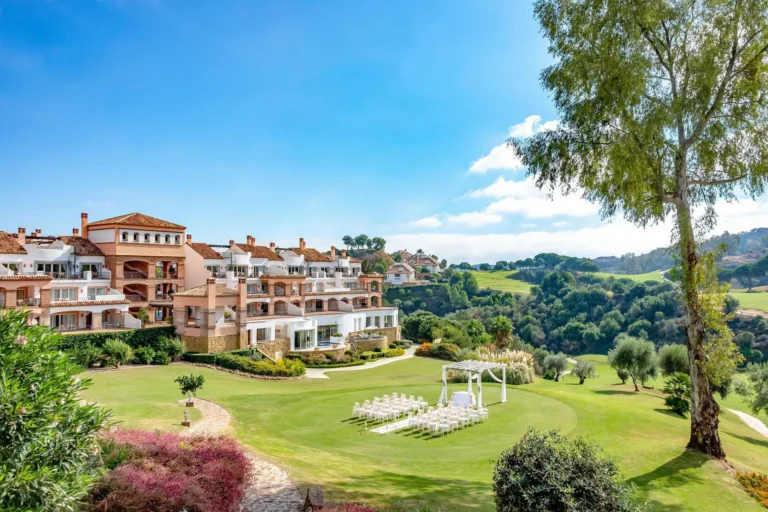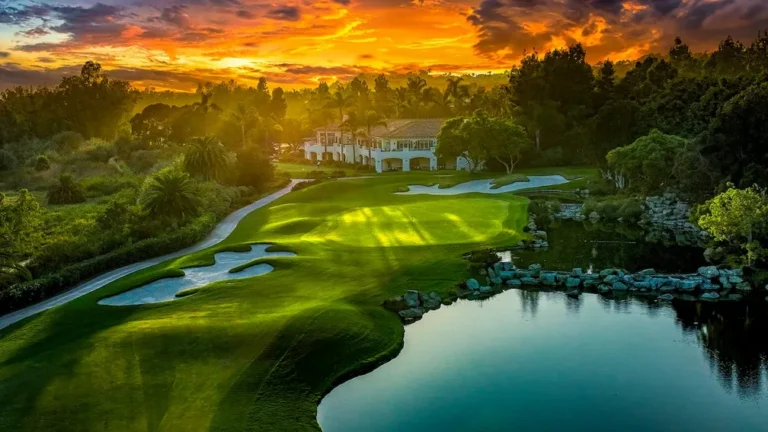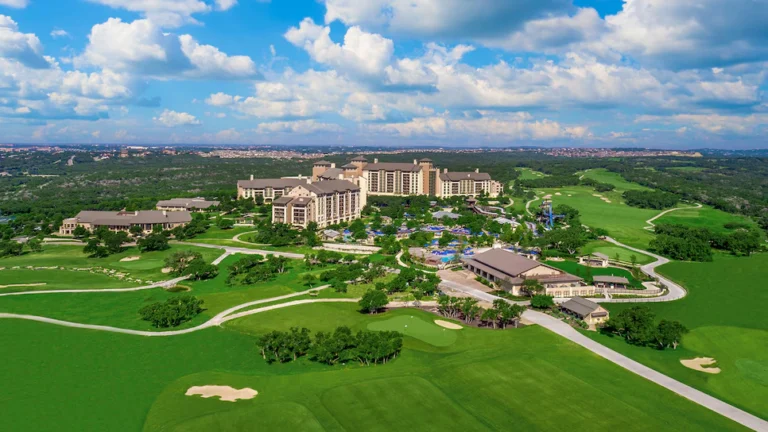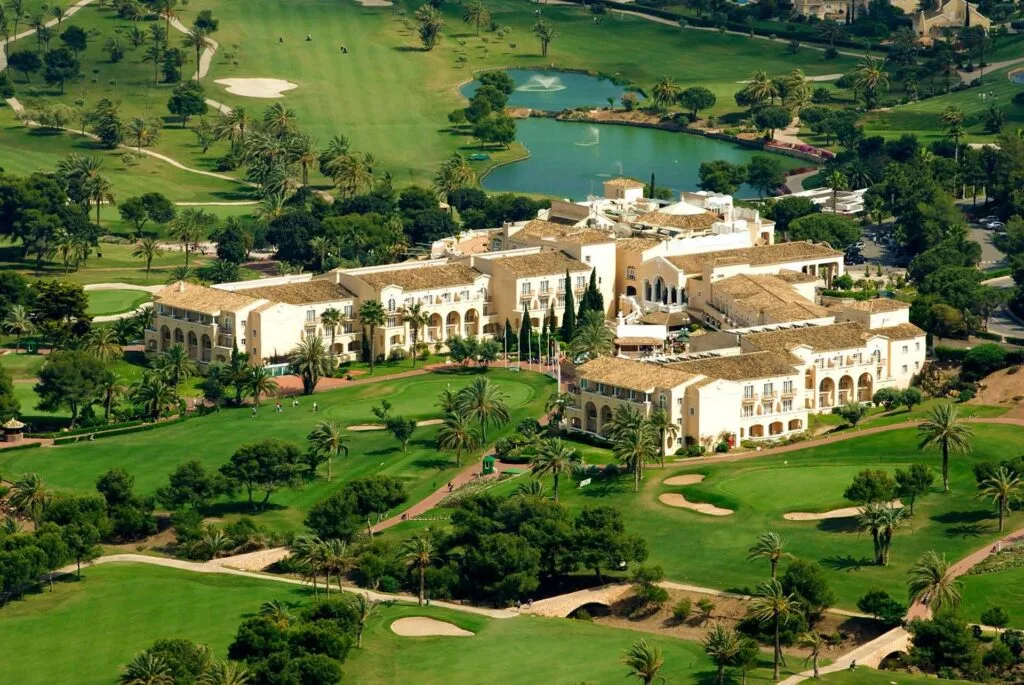
Top Golf Resorts Plans: Institutional Master Planning
Creating high-tier golf hospitality environments is a complex intersection of land use, environmental engineering, and luxury real estate. Unlike standard commercial projects, integrated golf resorts require a multi-decade operational vision. The layout must meet athletic and technical requirements while anchoring premium residential and hospitality assets. During the master planning phase, investors must prioritize enduring capital appreciation to avoid long-term operational deficits.
Historically, developers relied on aggressive earthmoving and standardized layouts to maximize housing frontage. Modern economic, environmental, and consumer expectations have dismantled this approach. Today, success requires a non-linear strategy that prioritizes localized microclimates and native ecosystems. Furthermore, the design must ensure a seamless guest journey from arrival to the final green.
A master plan is an adaptable spatial and economic framework rather than a static blueprint. It coordinates distinct asset classes—including championship courses, wellness enclaves, and luxury real estate—into a unified ecosystem. The following analysis outlines the systemic structures, financial dynamics, and governance models required to transform raw land into an internationally recognized golf destination.
Understanding “top golf resorts plans”
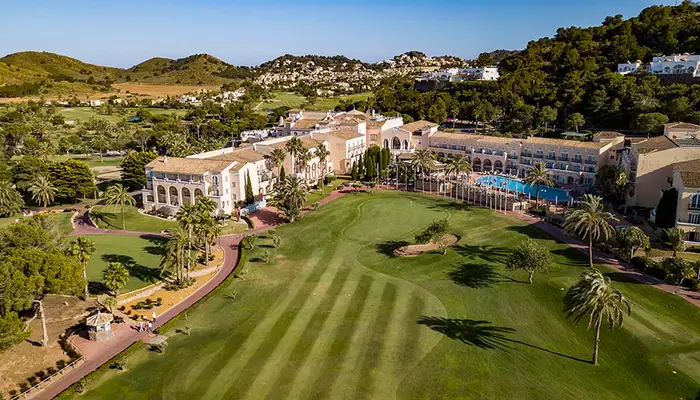
To evaluate a modern hospitality and sports master plan, one must look beyond marketing copy. One must examine the underlying technical framework. In institutional development, “top golf resort plans” refers to specialized, multi-disciplinary documents. These documents dictate spatial organization, environmental mitigation, asset integration, and financial staging. This technical roadmap balances the high spatial demands of athletic facilities with the density requirements of luxury real estate and infrastructure.
Novice developers often mistakenly treat golf routing and real estate layout as separate, sequential tasks. This siloed approach creates severe structural friction. For instance, routing a course purely for dramatic views can leave surrounding parcels isolated or inaccessible. Conversely, prioritizing density by lining fairways with housing ruins the course’s athletic integrity. It reduces safety margins for errant shots and destroys the natural vistas that drive premium property pricing.
True technical execution treats these competing demands as an interconnected system. The golf course must serve as the primary hydrologic and visual matrix of the property. Fairways and roughs function as managed stormwater drainage basins. Native vegetation buffers protect fragile ecosystems from urban runoff. Strategic grading creates privacy for residential units while maintaining sweeping landscape views.
Furthermore, these plans must address complex subsurface logistical challenges. Designs must account for separate circulation loops for guest golf carts, player traffic, maintenance fleets, and residential service vehicles. They must also establish closed-loop irrigation networks. These systems must process millions of gallons of reclaimed water daily without disrupting the guest experience.
Deep Contextual Background and Historical Evolution
Golf resort architecture has evolved over the last century, reflecting shifts in global economics, environmental regulation, and luxury travel. Understanding this trajectory explains why modern master planning now prioritizes environmental integration over industrial land modification.
The Era of Naturalism and Transport (Pre-1950)
Early golf resorts developed organically around natural geological formations. These resorts appeared along coastal links in Scotland and Ireland, and later near rail terminuses in the U.S. and Europe. Designs used existing terrain with minimal earthmoving. Iconic courses like St Andrews or Pinehurst relied on native sandy soils for drainage and local vegetation for hazards. Master planning was constrained by manual construction techniques. Consequently, the game conformed to the land, and lodging remained within walking distance of transport links.
The Heavy Industrial and Real Estate Boom (1960–1990)
Heavy earthmoving machinery, hydraulic irrigation, and air travel transformed resort development into an industrial process. Developers used golf courses as “loss leaders” to drive high-density residential sales. This period introduced the “housing track” layout. Fairways were straightened and flattened to maximize home lots along the perimeter. Architects frequently reshaped valleys, filled wetlands, and planted non-native turf requiring massive inputs of synthetic chemicals and water. This model prioritized short-term real estate liquidation over long-term ecological balance.
The Minimalist and Destination Revival (2000–2020)
At the turn of the millennium, a counter-movement emerged. Architects revived classic, site-specific design principles. This shift responded to consumer demand for remote, authentic destinations where the golf experience felt immersed in wilderness. Resorts like Bandon Dunes and Sand Valley led this change. Master plans moved away from high residential density. They focused on lower-impact, high-yield boutique models, such as detached rental cottages and fractional ownership. This preserved large sections of the landscape, lowered earthmoving costs, and increased the value of environmental seclusion.
The Climate-Adaptive Paradigm (2020s–Present)
Today’s development landscape is shaped by strict regulations, climate volatility, and changing demographics. Modern planning must deliver multi-generational utility. While the 18-hole championship course remains a core anchor, it is now paired with alternative layouts. These include 12-hole configurations, reversible loops, and short courses designed for flexible schedules. Projects prioritize climate-resilient turf, subsurface drainage filtration, and automated smart irrigation. They also integrate wellness centers, regenerative agriculture, and trail systems. The golf course is now engineered as a functional, living infrastructure asset that balances luxury recreation with active ecological stewardship.
Conceptual Frameworks and Spatial Mental Models
To synthesize the competing spatial, economic, and environmental pressures of a multi-asset development, master planners rely on specific conceptual frameworks. These mental models convert abstract design principles into concrete spatial relationships.
1. The Core-and-Finger Model
This framework routes the golf course through the property’s interior (the core). It then extends “fingers” of turf into development zones, or extends “fingers” of real estate into the course.
-
Application: The core layout clusters holes together. This minimizes the development footprint, lowers infrastructure costs, and preserves large blocks of native ecosystems.
-
Operational Boundary: This configuration offers a quiet golf environment free from visible housing. However, it reduces the total linear feet of high-value, “golf-frontage” real estate available for development.
2. The Hydrological Matrix Framework
This model treats the entire resort property as an active watershed. The golf course is routed along the lowest natural elevations to function as the primary stormwater management system.
-
Application: Fairways, roughs, and hazard lakes are engineered with subsurface gravel layers and bio-swales. These features capture, filter, and store all surface runoff from roofs, roads, and hardscaping.
-
Operational Boundary: This system reduces the need for expensive municipal stormwater infrastructure and guarantees an internal irrigation supply. It requires highly specialized engineering, however, to prevent fairways from becoming waterlogged or contaminated by pollutants during extreme weather.
3. The Concentric Guest Experience Gradient
This model organizes the resort into concentric zones based on noise, activity, and privacy levels, all centered around the primary clubhouse hub.
-
Application: High-traffic assets—such as the hotel, commercial village, and practice facilities—occupy the central inner zone. Mid-density rental villas flank the middle ring. The outer ring is reserved for private estate lots, wellness sanctuaries, and the remote back-nine holes, where the environment remains undisturbed.
-
Operational Boundary: This layout creates an intuitive, low-stress guest journey and simplifies logistics. Its rigid structure, however, can be difficult to implement on narrow, irregularly shaped, or fragmented land.
Key Categories, Design Variations, and Structural Trade-Offs
The macro-environment dictates a project’s architectural style, turfgrass selection, engineering requirements, and financial profile. A master plan must align with its specific geographical category to remain viable. Below are the six primary typologies of modern golf resort developments.
1. True Coastal Links
These layouts feature sandy, undulating terrain. They emphasize ground-game strategy, natural bunkers, and native fescue or bentgrass. While they require minimal earthmoving due to naturally ideal drainage, they must navigate strict coastal conservation laws and constant exposure to high winds.
2. Desert Oasis Enclaves
These highly engineered projects provide a striking visual contrast between lush fairways and arid landscapes. Designs utilize “target golf” layouts to minimize irrigated acreage. They demand sophisticated irrigation networks and salt-tolerant turfgrasses to utilize brackish or recycled water.
3. Mountain and Topographical Resorts
These courses feature dramatic elevation changes, terraced fairways, and forest or foothill vistas. Engineering focuses on erosion control, rock excavation, and managing steep cart transitions. Despite their visual prestige, these resorts face high construction costs and shorter, seasonal operating windows.
4. Tropical High-Capacity Frameworks
Designed for high-volume tourism in humid climates, these courses rely on aggressive surface grading and intensive subsurface drainage. They utilize heat-and-moisture-resistant turfgrasses. Their main challenge is managing weed and disease pressure while minimizing chemical inputs.
5. Sandhills and Inland Dunes
Located in rural sand ecosystems, these layouts combine the drainage of coastal links with more stable microclimates. They are sustainable and cost-effective to construct. However, their remote nature often requires heavy upfront investment in transport and hospitality infrastructure.
6. Urban Regeneration and Brownfield Conversions
These projects occupy reclaimed land, closed quarries, or former landfills. They maximize urban value by placing recreation near dense populations. While they require complex engineering—such as containment caps and gas mitigation—they benefit from existing utility connections and high local demand.
Structural Comparison of Resort Typologies
| Resort Typology | Relative CapEx | Primary Engineering Constraint | Irrigation Dependency | RE Premium |
| Coastal Links | Moderate | Coastal erosion/zoning | Low | Ultra-High |
| Desert Oasis | High | Soil stabilization/piping | Extreme | High |
| Mountain | Ultra-High | Rock excavation/slopes | Moderate | High |
| Tropical | High | Stormwater drainage | Low-Moderate | Moderate |
| Sandhills | Low-Moderate | Utility/transit routing | Low | Mod-High |
| Urban Regen | Variable | Contamination/gas | High | Variable |
Strategic Decision Logic
Investors must match a site’s natural characteristics to its financial goals. Avoid forcing a design style onto incompatible land.
For example, building a Scottish links-style course on heavy, impermeable clay will result in waterlogged fairways and poor turf quality. Such terrain requires a tropical or mountain model, which utilizes aggressive surface crowning and sand-capped fairways to force water off playing surfaces. Ultimately, the master plan must adapt to the soil’s natural percolation rate. Sand requires minimal intervention, while clay demands an extensive, costly network of subsurface drainage.
Detailed Real-World Implementation Scenarios
To understand how these master planning principles apply in practice, we can analyze four distinct development scenarios. Each scenario presents unique environmental constraints, specific layout strategies, and second-order economic impacts.
The High-Density Arid Desert Master Plan
-
Context: An 800-acre hyper-arid coastal site in the Middle East intended for a luxury resort community, featuring a championship course, a 200-room luxury hotel, and 400 premium residential villas.
-
Layout Strategy: The plan adopts a strict “target golf” design, capping the total irrigated playing surface at just 75 acres (compared to the traditional 150 acres). Fairways are kept narrow, bounded by wide, unirrigated desert waste areas utilizing native rocks, gravel, and drought-tolerant landscaping.
-
Engineering Execution: The entire course is sand-capped and sloped inward toward an underlying drainage network. Every gallon of irrigation water that passes through the turf is captured, filtered through a series of gravel beds, and returned to the resort’s central storage lakes. The turf choice is a highly salt-tolerant Seashore Paspalum, irrigated entirely with treated sewage effluent (TSE) blended with RO (reverse osmosis) reject water.
-
Second-Order Effects: The restricted turf footprint significantly lowers ongoing water costs, while the stark visual contrast between the bright green fairways and the rugged desert backdrop drives a 35% pricing premium on the residential lots directly facing the course.
The Fragile Alpine Mountain Environment
-
Context: A steep, heavily forested mountainous site in the Pacific Northwest with a short 5-month operational window, sensitive trout streams intersecting the property, and significant seasonal snowmelt.
-
Layout Strategy: The routing follows a low-impact single-loop configuration that snakes along natural contours to minimize cut-and-fill grading. Cart paths are engineered as structurally reinforced, permeable asphalt shelves that double as erosion control barriers along steep slopes.
-
Engineering Execution: To protect the nearby trout streams from chemical runoff, the plan establishes wide, non-entry “buffer zones” around all natural waterways. The course uses a closed-loop subsurface drainage system specifically beneath the greens and tees—the areas requiring the highest chemical inputs. Runoff from these zones is funneled into lined, subterranean retention vaults where it is treated before being slowly released back into the watershed.
-
Failure Mode & Mitigation: During the spring thaw, massive volumes of water threaten to wash out the lower fairways. The master plan addresses this by integrating a network of stepped boulder cascades and open bio-retention swales that slow down the rushing water, catching sediment before it can reach the streams.
The Low-Impact Remote Sandhills Model
-
Context: A 1,500-acre parcel of deep, inland suns in a rural, low-population area. The goal is to build a world-class walking-only golf destination with minimal real estate and a high-end boutique lodge.
-
Layout Strategy: The master plan leverages the site’s natural topography, allowing the routing to follow the existing ridges and valleys with almost zero bulk grading. Bunkers are designed as natural “blowouts,” formed simply by letting the prevailing winds erode the exposed sand faces along the fairways.
+-------------------------------------------------------------------------+
|                   SANDHILLS MINIMALIST ROUTING                          |
+-------------------------------------------------------------------------+
|      ___         Natural Ridge       ___                                |
|     /   \                           /   \      Natural Blowout         |
|    /     \_____   Fairway   _______/     \____     Bunker           |
|   /            \___________/                  \_________\_              |
|  [Native Vegetation]       [Fine Fescue Turf]          [Open Sand]      |
+-------------------------------------------------------------------------+
-
Engineering Execution: The native sandy soil provides exceptional natural drainage, eliminating the need for expensive subterranean perforated piping networks. The course is seeded with fine fescue grasses that thrive in low-nutrient environments, drastically reducing the resort’s long-term fertilizer and water needs. Accommodation is limited to scattered, detached cabins built on helical screw piles to avoid disturbing the root systems of the surrounding prairie vegetation.
-
Key Challenge: The extreme remoteness of the site requires building a self-contained infrastructure backbone, including a dedicated wastewater treatment plant, a private solar power array, and specialized regional transport solutions to shuttle guests from distant airports.
The Coastal Links and Wetlands Reclamation
-
Context: A low-lying tidal coastal site in Europe, partially composed of historical agricultural drainage land and sensitive saltwater marshes, intended for a world-class resort.
-
Layout Strategy: The routing is designed around the daily tidal cycles. The front nine sits on higher, protected dunes, while the back nine integrates directly with the brackish wetlands, creating a dynamic playing environment where hazards change based on the tide.
-
Engineering Execution: The project requires building an expansive, engineered earthen dike and gate system that manages seawater influx during storm surges while allowing natural tidal rinsing of the salt marshes. Fairways directly adjacent to the marshlands are capped with a thick 12-inch layer of clean sand to separate the playing turf from the saline groundwater table.
-
Compounding Risks: If the dike gate system fails or a major storm surge coincides with a high tide, seawater can flood the low-lying fairways. This would instantly kill standard bentgrass turf and require an expensive, multi-month soil flushing process with fresh water to restore the correct chemical balance.
Planning, Cost, and Capital Resource Dynamics
Developing a world-class golf resort demands a massive upfront allocation of capital. Unlike standard commercial real estate projects, where returns can be realized within 18 to 24 months, a comprehensive golf resort master plan requires a long-term investment horizon, often taking 5 to 7 years to achieve stabilization.
Capital Expenditure Allocation
The financial structure of a project is divided between direct construction costs and major indirect infrastructure requirements. The table below represents a typical capital expenditure distribution for a premium, single-course integrated resort development on a 500-acre site.
Understanding Hidden and Variable Costs
Beyond the visible line items of earthmoving and vertical construction, several hidden financial dynamics can significantly impact a project’s viability.
-
The Sand-Capping Variable: On sites with heavy clay or poor native soils, architects often mandate “sand-capping”—spreading a uniform layer of specialized, USGA-specification sand 4 to 12 inches deep across all fairways to ensure rapid drainage. If sand must be trucked in from off-site sources, this single requirement can add $2,000,000 to $5,000,000 to the budget, depending on fuel prices and transport distances.
-
The Turf Establishment Window: The period between initial seeding or sprigging and the official opening day represents a critical financial vulnerability. This phase requires full irrigation, fertilization, and mowing teams, but generates zero revenue. If unseasonal weather or a severe storm washes out newly seeded fairways, the opening date can slip by an entire year, delaying real estate sales and causing significant pre-opening operational deficits.
-
Infrastructure Opportunity Cost: Every square foot of land allocated to open space, safety buffers, or complex golf routing reduces the total land available for high-density residential or commercial real estate. Master planners must constantly evaluate whether a dramatic, sprawling 18-hole routing generates enough of a branding premium across the remaining real estate parcels to offset the loss of potential home lots.
Tools, Technological Strategies, and Support Systems
Modern master planning has evolved far beyond two-dimensional drawings. High-precision software, automated field equipment, and advanced agronomic systems are essential to translate a conceptual design into an operationally efficient physical asset.
1. High-Resolution GIS and LiDAR Topographical Mapping
Before any earth is moved, drones equipped with LiDAR (Light Detection and Ranging) map the property’s topography down to centimeter-level accuracy. This data is imported into Geographic Information Systems (GIS) software, allowing master planners to run digital simulations of stormwater runoff, identify natural drainage patterns, and analyze line-of-sight views from potential real estate lots. This prevents costly surprises during the grading phase.
3D Hydrological and Microclimate Simulation Software
Using historical weather data, engineers create 3D digital models of the site’s microclimate and watershed dynamics. These simulations predict exactly how wind patterns will move across the fairways, where cold air pockets will settle during shoulder seasons, and how the course will handle 100-year storm events.
This information dictates the precise placement of windbreaks, the orientation of fairways, and the capacity requirements of irrigation lakes.
GPS-Guided Precision Grading Systems
Modern heavy machinery, such as bulldozers and graders, operates using integrated GPS positioning tied directly to the architect’s digital 3D model. As the operator moves across the site, the machine’s blade automatically adjusts its height to cut and fill the ground exactly to the specified design contours. This ensures complex green complexes and subtle fairway slopes are executed precisely as planned, eliminating human error and speeding up construction timelines.
Centralized Smart Irrigation and Variable Frequency Drive (VFD) Pumping
Modern irrigation systems utilize individual, addressable sprinkler heads paired with on-site soil moisture sensors and local weather stations. A central computer system automatically adjusts water application rates for each head based on real-time soil conditions, humidity, and wind speed.
This setup is powered by Variable Frequency Drive (VFD) pumping stations that instantly adjust their power output to match water demand, maximizing energy efficiency and reducing total water waste by up to 30%.
Integrated Moisture-Sensing Subsurface Systems
To maintain consistent playing conditions across variable terrain, planners integrate subterranean sensor networks beneath high-priority surfaces like greens and tees. These sensors continuously track soil moisture levels, salinity, and temperature at multiple depths.
The data is beamed directly to the agronomy team’s mobile devices, allowing them to spot drought stress or salt accumulation before visual damage appears on the turf surface.
Drone-Based Multispectral Agronomic Imaging
Regular flights by drones equipped with multispectral cameras capture light wavelengths that indicate turf health and stress levels before they are visible to the human eye.
By analyzing these imaging maps, superintendents can target fertilizer, pesticide, and water applications strictly to the specific patches of turf that need treatment. This data-driven approach avoids blanket applications, saving money and reducing environmental runoff.
Custom Subsurface Vacuum and Ventilation Systems
For premium greens in challenging climates, master plans integrate specialized drainage and ventilation networks directly beneath the green complexes, such as SubAir systems. These networks can actively blow fresh air up through the gravel blanket to cool or warm the turf root zone, or run in reverse to pull excess water out of the soil profile via a powerful vacuum during heavy downpours.
This level of control ensures optimal turf health and tournament-ready firmness regardless of sudden weather shifts.
Risk Landscape and Systemic Failure Modes
A golf resort project faces a complex matrix of compounding risks throughout its development and operational lifespan. Because the assets are interconnected, a failure in one area can quickly cause issues throughout the entire resort system.
1. Regulatory Hurdles and Environmental Entitlements
The most common point of failure for early-stage projects is the inability to secure necessary environmental permits. Developing large tracts of land often involves navigating strict protections around wetlands, endangered species habitats, and local water rights.
A failure to accurately map these constraints during the initial scoping phase can lead to prolonged legal challenges, multi-million dollar fines, or a total halt to construction after significant capital has already been spent.
2. Severe Microclimate and Meteorological Mismatches
Failing to account for localized microclimates can lead to long-term agronomic issues. For example, routing a green into a deep, shaded valley that receives less than 4 hours of direct sunlight daily creates a high-moisture, low-air-circulation environment where turfgrass cannot survive without expensive artificial lighting or regular turf replacement.
Similarly, failing to anticipate prevailing wind directions can render holes virtually unplayable for the average guest, driving down repeat visitation rates.
3. Long-Term Hydrological and Salinity Imbalances
When a resort relies on recycled water or treated sewage effluent for irrigation, salt can gradually build up in the soil over time. If the master plan lacks a robust subsurface drainage network or an adequate supply of clean, fresh water to periodically flush the soil profile, this salt accumulation will eventually choke the turfgrass roots.
This causes widespread turf death, soil compaction, and a severe drop in the resort’s visual and playing quality.
4. Fragmented Spatial Assets and Logistical Friction
When the physical assets of a resort are poorly integrated, severe operational friction can occur. If the main maintenance compound is located too far from the central holes, crews waste valuable hours simply transporting equipment back and forth, driving up labor costs.
Furthermore, if the paths for guest carts, player traffic, and heavy resort maintenance vehicles intersect frequently, it creates noise disturbances, increases accident risks, and degrades the premium, secluded atmosphere that high-paying guests expect.
Governance, Maintenance, and Long-Term Adaptation
An exceptional master plan requires a structured governance framework to guide its transition from initial construction to daily operations, ensuring the asset remains viable for decades.
Establishing Active Review Cycles
A master plan must be treated as a living document. Institutional resorts establish a formal review cycle every 3 to 5 years to evaluate the property’s performance against evolving market trends, climate shifts, and agronomic data.
This process brings together the resort’s general manager, director of agronomy, lead architect, and financial stakeholders to adjust capital allocation plans, schedule course renovations, and update real estate development phases based on actual performance.
Defining Capital Reserve Adaptation Triggers
To prevent the gradual deterioration of the property, the governance model must define clear, data-driven triggers for capital reinvestment. These thresholds are linked to specific operational metrics rather than arbitrary dates.
If an irrigation system’s pumping efficiency drops below a set percentage, or if water use increases by more than 15% due to aging pipe networks, it automatically triggers a targeted modernization project funded by a dedicated capital reserve account. This data-driven approach prevents deferred maintenance from stacking up into a massive, unmanageable capital deficit.
The Long-Term Adaptive Governance Checklist
This three-tiered operational framework ensures ongoing quality control, environmental compliance, and timely infrastructure updates over a 30-year operational horizon.
Measurement, Tracking, and Evaluation Metrics
To maintain a premier global standing, a golf resort must implement a strict system of leading and lagging key performance indicators (KPIs) that balance technical agronomic health with financial performance.
Leading vs. Lagging Indicators
-
Leading Indicators (Predictive Metrics): These metrics track immediate physical and operational conditions to spot potential problems before they hit the bottom line. Examples include weekly soil moisture uniformity scores, volumetric water content (VWC) trends, turf canopy temperature variants, and real-time member and guest satisfaction sentiment scores collected via digital post-round surveys.
-
Lagging Indicators (Outcome Metrics): These metrics evaluate the long-term financial and physical health of the asset based on past performance. Key examples include Revenue Per Available Room (RevPAR) for the hospitality division, Total Revenue Per Available Room (RevPARST) for the golf operation, annual real estate absorption rates, and the long-term capitalization rate of the resort’s commercial assets.
Qualitative vs. Quantitative Signals
A successful operation balances hard quantitative data with qualitative human insights. While a digital sensor can confirm that a green has optimal moisture levels (a quantitative metric), it takes a skilled agronomist or a professional tournament coordinator to judge whether the surface firmness, ball roll trueness, and visual presentation meet the luxury standards expected by high-end guests (a qualitative metric). Master plans must create formal channels where these qualitative evaluations directly influence daily maintenance schedules.
Frameworks for Operational Reporting Documentation
To maintain high standards across teams, the resort relies on structured, standardized internal reports. Below are three examples of how this operational data is documented.
Common Misconceptions and Architectural Oversimplifications
When executing premium resort concepts, developers frequently rely on outdated assumptions that can damage the long-term financial and physical viability of the project.
“A championship layout must be incredibly difficult to attract high-end travelers.”
-
Correction: This is a severe operational mistake. While a course should offer a fair challenge for low-handicap players from the back tees, the vast majority of resort guests are mid-to-high-handicap golfers looking for an enjoyable, low-stress experience. If a course features forced carries over wetlands on every hole, deep bunkers, and severe slopes, round times will balloon past five hours, guest frustration will rise, and repeat bookings will plummet. Modern planning focuses on wide fairways paired with strategic angles that reward smart placement without punishing average players.
“Golf courses are inherently bad for the environment and waste massive amounts of fresh water.”
-
Correction: This perspective ignores modern engineering capabilities. While poorly planned legacy projects definitely earned this reputation, modern courses function as highly efficient environmental systems. When designed correctly, they act as critical green lungs for urban areas, preserve native wildlife corridors, and serve as active stormwater filtration basins. Furthermore, top-tier projects are engineered to run entirely on reclaimed wastewater, treated sewage effluent, or brackish water sources that are completely unsuited for agricultural or domestic use.
“Adding an extra nine holes or a short course is an easy way to boost revenue.”
-
Correction: Every additional hole adds significant ongoing maintenance costs, requires extra equipment, and increases water demands. If a resort expands its footprint without a corresponding rise in regional tourism or clear demand from its real estate buyers, the extra holes will quickly dilute operational efficiency. The modern approach avoids simply adding more holes, favoring flexible layouts like high-concept 6-hole short courses, putting courses, or reversible loops that require less land and water while catering to guests with limited time.
“Standard residential civil engineers can easily handle golf course grading and drainage plans.”
-
Correction: Golf course architecture requires specialized knowledge of athletic playability, complex agronomics, and subtle micro-topography that traditional civil engineers are rarely trained to manage. A standard engineer often designs rigid, linear slopes and basic retention basins that look out of place and ruin the strategic flow of a course.
Execution requires a dedicated golf course architect working alongside specialized hydrologists to ensure the grading feels natural, drains perfectly, and enhances the strategic game.
Ethical, Contextual, and Environmental Considerations
Developing a large-scale resort introduces significant ethical responsibilities toward local communities and native ecosystems. Investors and planners must look beyond short-term financial returns and design with a deep respect for the long-term social and environmental context of the region.
Securing Local Water Rights and Protecting Communities
In arid or developing regions, water allocation is a sensitive issue. A resort must never compromise the local population’s access to clean, fresh drinking water or agricultural supplies. Master plans should prioritize independent water independence by integrating private desalination plants, expanding rainwater collection infrastructure, or partnering with local municipalities to utilize treated wastewater. This ensures the resort operates as a net-positive addition to the local utility infrastructure rather than a drain on public resources.
Honoring Cultural Heritage and Archeological Sites
When transforming large tracts of raw land, developers often encounter historic trail systems, indigenous burial grounds, or significant archaeological ruins. Master planners must conduct thorough cultural surveys before finalizing any routing plans.
Rather than grading over these historic features, top-tier layouts intentionally integrate them into the property as protected, non-entry zones, preservation areas, or unique educational points of interest along the course trails. This approach preserves local history while giving the resort a deep, authentic connection to its location.
Championing Native Biodiversity and Wildlife Corridors
A monoculture of manicured turfgrass can disrupt local ecosystems. Modern master planning addresses this by keeping managed turf strictly within the active playing corridors, while filling the surrounding roughs and out-of-bounds areas with native plants, local wildflowers, and undisturbed wilderness.
This creates interconnected wildlife corridors that allow local fauna to move safely across the property, while significantly reducing the resort’s overall demand for chemical fertilizers and pesticide treatments.
Synthesis and Long-Term Strategic Outlook
The future of luxury sports hospitality belongs to developments that treat sports architecture, premium real estate, and environmental engineering as a single, connected ecosystem. The era of generic, high-input housing-track layouts has passed. As regulatory frameworks tighten and global travel expectations evolve, true long-term value will be driven by master plans that prioritize site-specific design, water independence, and flexible, multi-generational utility.
An exceptional master plan does not fight against its natural environment; it leverages the unique topography, hydrology, and cultural heritage of the site to create a distinctive, authentic sense of place. By investing in precise upfront engineering, adopting data-driven smart maintenance technologies, and establishing clear governance frameworks, developers can protect their assets against volatile climate shifts and changing economic cycles.
Ultimately, success is defined by balance. When a golf course functions seamlessly as a regional watershed, a native wildlife sanctuary, and a premier athletic facility, it elevates the value of its surrounding real estate and secures its position as a highly profitable, sustainable global destination for decades to come.