Top Golf Vacation Options: Structural Evaluation Manual
The modern golf expedition has evolved beyond merely packing a bag and booking consecutive morning tee times. Selecting from the premier tier of golf travel now requires a complex matrix of architectural appreciation, logistical coordination, seasonal microclimates, and hospitality infrastructure. For the discerning golfer, the search for the definitive trip requires balancing the historical weight of iconic design against the operational realities of modern resort management and course accessibility.
This tension between prestige and practicality defines the contemporary planning process. A common error is evaluating a destination purely by its championship pedigree or its frequency of appearance on televised tours. In practice, a highly ranked tournament venue does not inherently translate into a seamless or rewarding group travel experience. True quality relies heavily on variables that rarely appear in standard marketing brochures: the pacing of daily play, the structural integrity of agronomic practices under heavy seasonal traffic, the proximity of practice facilities to the opening tee, and the architectural variety presented across a multi-day itinerary.
Concurrently, global golf tourism has fractured into highly specialized sub-markets. A dedicated individual chasing pure architectural validation across rugged coastal links requires an entirely different framework than a corporate group seeking a high-service resort with multi-tiered amenities. Understanding these distinctions is critical for preventing misaligned expectations, inflated expenditures, and logistical friction.
Understanding “Top Golf Vacation Options”

To analyze the market properly, one must dismantle the casual terminology that clouds consumer choices. The phrase “top golf vacation options” is frequently reduced to a static list of heavily marketed resorts. This superficial classification overlooks the deep operational and architectural elements that dictate a destination’s true utility. A premium golf option is not merely a collection of eighteen-hole layouts. It is an integrated ecosystem where agronomy, routing philosophy, real estate density, and hospitality logistics intersect to create a unique sporting environment.
Oversimplification carries distinct risks. When planners rely exclusively on consumer aggregate ratings, they often select destinations optimized for volume rather than architectural merit or conditioning. For example, a resort may feature a course designed by a famous architect. However, modern renovations or heavy cart traffic may have fundamentally altered the original strategic intent. The result is a mismatched experience where the golfer pays for historical prestige but receives a compromised, slow-paced product.
A Three-Lens Evaluation Framework
To make informed decisions, evaluate every potential destination through three distinct lenses:
-
The Architectural Lens: Does the routing leverage natural topography, or does it rely on artificial earth-moving that disrupts the strategic flow and natural drainage of the land?
-
The Operational Lens: How does the resort manage the tension between public play, member access, and corporate outings? The goal is to ensure this balance does not degrade the pace of play or the physical condition of the putting surfaces.
-
The Spatial Lens: Is the property a dense, real-estate-heavy development where houses line every fairway? Or is it a “core” golf design where nature and strategy dictate the boundaries?
By shifting focus from brand recognition to these core structural components, travelers can look past commercial hype. This approach allows you to identify destinations that align precisely with your group’s technical skill, physical endurance, and stylistic preferences.
The Structural Evolution of Golf Travel
The contemporary golf travel landscape stems from a historical shift from exclusive clubs to purpose-built destination resorts. In the late 19th and early 20th centuries, golf travel was largely confined to British coastal links or private U.S. enclaves. Destinations like St Andrews and Pinehurst utilized natural sandy soils and proximity to rail lines. These hubs established a standard where the environment dictated the architecture, and travel remained an elite, time-consuming pursuit.
Mid-twentieth-century developments introduced major structural changes, driven by highway expansion, commercial aviation, and residential golf communities. Developers often used golf courses as “loss leaders” to drive high-end real estate sales. This model fundamentally altered course architecture. Routings were stretched to maximize residential frontage, creating long distances between greens and tees that made walking impractical. Consequently, the motorized golf cart transformed from a luxury into a necessity, altering the game’s pace, social dynamics, and physical demands.
In the late 1990s and early 2000s, a counter-revolution re-established the primacy of remote, walking-centric, minimalist golf destinations. Developers looked past real estate models to secure remote “sand-belt” land chosen specifically for its architectural potential. This modern era favors expansive, multi-course complexes that reject residential housing entirely. These destinations prioritize traditional caddie programs, firm fescue or bentgrass turf, and classic design philosophies. This tension between real-estate-driven models and pure, remote golf sanctuaries remains the primary dynamic shaping modern travel decisions.
Conceptual Frameworks for Destination Evaluation
To systematically compare diverse geographic regions and resort styles, travelers can use specific analytical models to cut through subjective bias. These frameworks evaluate options based on objective, quantifiable metrics.
1. The Turfgrass-to-Topography Alignment Model (TTAM)
This framework evaluates the structural integrity of a course’s playing surface relative to its geological foundation and local climate. A high-scoring destination perfectly matches its grass species to its soil profile and weather patterns.
-
High Alignment: Traditional coastal links built on sand with fine fescue grasses. The soil drains naturally, the grass requires minimal chemical inputs, and the course plays fast and firm.
-
Low Alignment: A heavy clay site in a humid environment using modern bentgrass. This requires mechanical subsurface cooling and heavy irrigation, leading to soft surfaces that rarely reward a strategic ground game.
2. The Logistics-to-Leisure Efficiency Ratio (LLER)
This model calculates the time spent on non-golf administrative tasks against hours actually spent on the course or practice facilities.
-
Elite Efficiency: An elite destination minimizes interior travel. A centralized footprint—where lodging, dining, and multiple tees sit within a short walking radius—maximizes LLER.
-
Operational Drag: If a resort requires a thirty-minute shuttle ride between the lodge, the range, and the tee, the LLER drops. This increases group fatigue and diminishes the spontaneous nature of the trip.
3. The Skill-to-Strategy Inclusivity Index (SSII)
This index measures how effectively a course’s architecture accommodates a wide range of abilities without relying solely on raw length or artificial hazards.
-
High SSII: Achieved through wide fairways, generous angles of approach, and open green fronts. These features allow shorter hitters to use the ground to advance the ball. Simultaneously, the course challenges elite players through precise pin positions and strategic angles.
-
Low SSII: These courses rely on forced carries, dense rough, and unilateral hazards. Such designs frequently alienate higher-handicap players within a group.
Key Categories and Architectural Variations
When selecting from premium golf tiers, properties fall into categories defined by terrain, philosophy, and service. Choosing the right option requires understanding the trade-offs inherent in each model.
1. Pure Sand-Belt Destination Resorts
These properties are built exclusively for golf in remote areas where sandy deposits allow for exceptional drainage. They feature multiple courses by modern minimalist architects, supported by high-end lodging and walking-only policies.
-
Trade-off: Access often requires regional flights or long drives, and there are minimal non-golf amenities.
2. Historic Championship Paradigms
These properties allow travelers to play courses that have hosted national championships. They offer tradition, iconic clubhouses, and a chance to test your game against historical benchmarks.
-
Trade-off: Tee times are difficult to secure, often requiring year-long lead times or lottery entry. The courses can also be overly punishing for casual players.
3. Classical Multi-Course Estates
These grand resorts combine historic hotels with a variety of courses from different eras. They offer a mix of golden-age architecture and modern resort designs, alongside wellness facilities and fine dining.
-
Trade-off: Sprawling layouts often require shuttle transfers, and the experience can feel corporate compared to a dedicated golf sanctuary.
4. Coastal Links Ecosystems
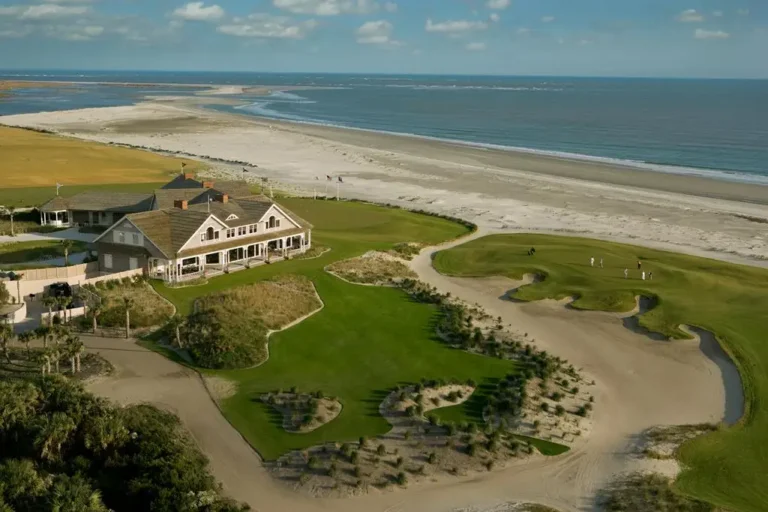
Set on dunes along the ocean, these courses represent the game in its oldest form. The experience is defined by changing winds, firm turf, and unpredictable weather that demands creative shot-making.
-
Trade-off: These destinations involve complex international logistics, variable weather, and a steep learning curve for players used to soft, target-style golf.
5. High-Service Desert Oasis Enclaves
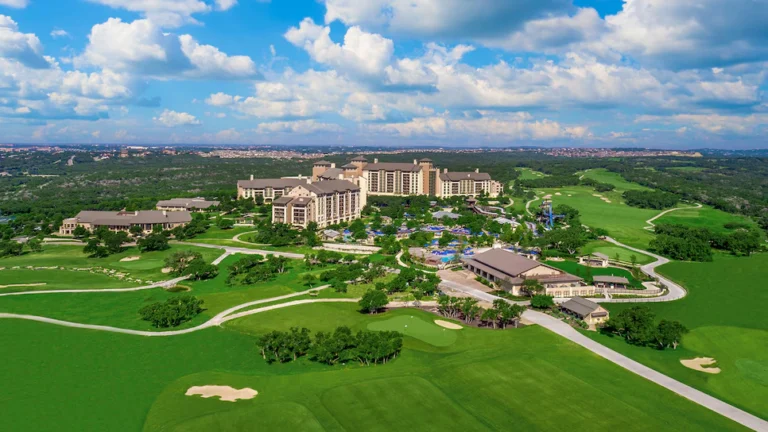
These destinations offer manicured fairways carved out of arid landscapes. They are known for exceptional service, luxury real estate, and winter microclimates that provide warmth when northern courses close.
-
Trade-off: Play is tied to motorized carts on restricted paths, and the “target” architecture heavily penalizes offline shots.
6. Private-Access Institutional Alliances
These exclusive properties grant limited resort access to otherwise private clubs. They offer uncrowded conditions, historic clubhouses, and elite service.
-
Trade-off: Extremely high costs, strict codes of conduct, and limited availability often tied to specific lodging partnerships.
Comparative Framework
| Category | Primary Agronomy | Transit Footprint | Optimal Groups | Operational Constraints |
| Sand-Belt | Fescue/Bent | Centralized/Remote | Dedicated purists | Physically demanding |
| Championship | Bent/Poa Annua | Sprawling/Major | Traditionalists | Strict lotteries |
| Multi-Course | Hybrid/Rye | Expansive/Shuttle | Families/Corporate | Pace-of-play issues |
| Coastal Links | Fescue/Colonial | Linear/Car hire | Experienced | Extreme weather |
| Desert Oasis | TifWay/Poa | Gated/Private | Cart-reliant | Unforgiving boundaries |
| Private Alliance | Elite Bentgrass | Ultra-low density | Executive/High-budget | Restrictive bylaws |
Strategic Decision Logic
Choosing the right category requires a realistic assessment of a group’s stamina and play style. A common error is booking a walking-only sand-belt resort for a group accustomed to motorized carts and target-style golf. This mismatch often leads to physical exhaustion by the third day, diminishing both performance and enjoyment. Ensure the terrain’s physical demands align with the real-world habits and capabilities of every group member.
Planning Tip: To avoid “logistical friction,” confirm whether a resort’s shuttle service is on-demand or scheduled. If you are planning a multi-day trip, prioritize properties that offer a “centralized village” footprint to maximize your time on the course.
Detailed Real-World Scenarios and Group Dynamics
To understand how these variables play out across different trips, we can look at realistic scenarios that highlight common planning challenges, financial trade-offs, and potential points of failure.
The Multi-Generation Family Milestones Group
An eight-player group spanning three generations (ages 24 to 76) wants to celebrate a retirement. Handicap levels range from 4 to 36, with two members experiencing limited physical mobility that makes walking eighteen holes impossible.
-
The Choice: A classic multi-course estate with flexible cart options and varied course styles.
-
Critical Decision Point: The planner must explicitly avoid walking-only link properties, despite their high rankings. Instead, they need a property with adjacent courses of varying difficulty, allowing advanced players to test themselves on a championship layout while others enjoy a more forgiving resort course.
-
Hidden Risk: Slow play caused by the resort’s mixed-skill traffic can frustrate low-handicap players. To prevent this, the group should secure the earliest available morning tee times to set their own pace.
The Dedicated Low-Handicap Architectural Pilgrimage
Four competitive amateur players (all under a 5 handicap) want to execute a high-density, five-day trip focused entirely on classic design strategies and firm, fast turf conditions.
-
The Choice: A remote, sand-belt destination resort featuring three distinct courses built across rolling dduneland.
-
Critical Decision Point: The group opts for a walking-only destination with a dedicated caddie program. They prioritize architectural variety and routing quality over lodging luxury, choosing simple on-site cabins located right next to the practice putting greens.
-
Hidden Risk: Physical fatigue from playing 36 holes a day can compromise swing mechanics and enjoyment by the fourth day. The group can manage this by booking a single 18-hole round on day three, focusing on a relaxed short-course or putting course session in the afternoon to recharge.
The High-Value Corporate Retainer Network
A corporate planner needs to host twelve key clients for an annual retreat. The group requires premium private accommodations, upscale dining options for evening entertainment, and a golf format that keeps players of all skill levels engaged without causing embarrassment.
-
The Choice: A high-service desert oasis enclave featuring premium villas and private-access privileges.
-
Critical Decision Point: The planner chooses a resort that offers comprehensive cart amenities, GPS-enabled tracking, and an extensive food and beverage service right on the course. The selected format is a modified scramble, which reduces individual pressure while keeping the pace of play moving efficiently.
-
Hidden Risk: The penal nature of desert golf can lead to a high volume of lost balls, frustrating casual players and dragging down the pace of play. The planner can counter this by selecting a course known for wider turf corridors and minimal forced carries off the resort tees.
Planning, Cost, and Resource Dynamics
The financial framework of an elite golf trip extends well beyond the base cost of lodging and green fees. A truly accurate budget must account for a variety of secondary expenses that, if unmanaged, can quickly inflate the overall cost of the trip.
Caddie programs represent a significant, often under-calculated variable. At premium walking properties, a traditional caddie or double-bag forecaddie is often mandatory. This fee structure includes a base rate paid directly to the resort, plus a customary cash tip per round based on performance. Across a four-day itinerary with double rounds, caddie fees alone can add up to a substantial per-person expense that must be budgeted for in cash.
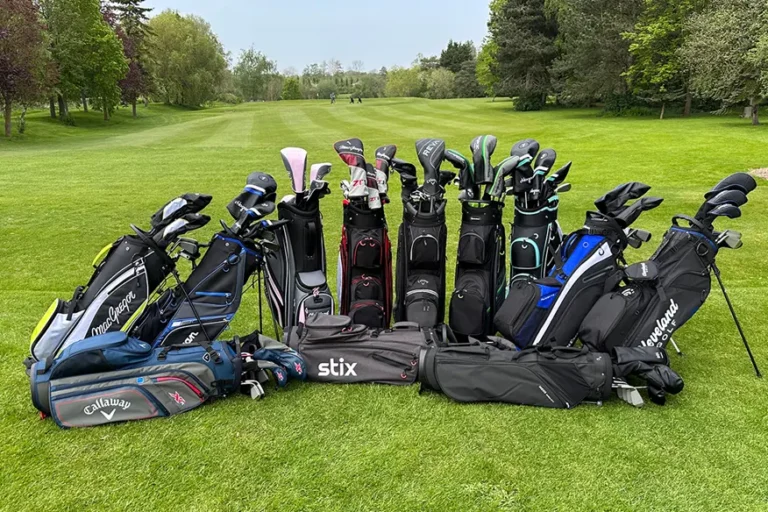
Club logistics present another major operational choice: checking clubs as standard airline baggage versus utilizing a dedicated luggage shipping service. While shipping services offer unmatched convenience by picking up bags at a traveler’s home and delivering them straight to the resort golf shop, they come at a significant premium compared to standard airline baggage fees.
Comprehensive Cost-Tier Projection Index
| Expense Category | Tier I: High-Value Value Base | Tier II: Balanced Premium | Tier III: Ultra-Luxury Elite |
| Daily Green Fees (per round) | $125 – $250 | $275 – $475 | $500 – $850+ |
| Lodging Structure (per night) | $150 – $300 (Standard Room) | $350 – $650 (Premium Cottage) | $800 – $1,800+ (Private Villa) |
| Caddie Allocation (per player) | $40 – $60 (Forecaddie share) | $100 – $140 (Single Caddie) | $150 – $200+ (Elite Senior Caddie) |
| Logistical Club Transit | $70 – $120 (Airline baggage return) | $150 – $250 (Standard shipping) | $280 – $450+ (Express international shipping) |
| Daily Dining & Hospitality | $60 – $100 | $120 – $220 | $250 – $500+ (Tasting menus) |
Strategies, Coordination, and Support Systems
Executing a complex golf itinerary requires a reliable operational strategy. Planners can choose between utilizing internal resources, partnering with specialized golf travel agencies, or relying on digital platforms to streamline coordination.
-
Dedicated Golf Travel Agencies: These specialists maintain direct relationships with resort directors and private clubs, often granting them access to protected tee time blocks that never appear on public reservation calendars. They are highly effective for planning complex international itineraries, such as coastal links trips to Scotland or Ireland, where they can seamlessly coordinate drivers, vehicles, and tee time sequencing.
-
Limitation: This service includes built-in markups, and thitstineraries are often restricted to a set network of partner properties.
-
-
Direct Resort Coordinators: Working directly with an internal on-site resort coordinator is often the most efficient route for domestic multi-course properties. These coordinators possess intimate knowledge of their property’s daily operations, tournament schedules, and optimal course pairings.
-
Limitation: They cannot assist with travel logistics outside their own resort boundaries.
-
-
Independent Digital Coordination Platforms: Utilizing shared digital spreadsheets and specialized group communication tools allows independent planners to maintain complete control over the itinerary. This approach cuts out middleman fees and allows for total flexibility in lodging and dining choices.
-
Limitation: The planner bears full responsibility for resolving any logistical errors, flight delays, or sudden weather disruptions.
-
Risk Landscape and Failure Modes
Even the most meticulously planned itinerary can be disrupted by systemic issues and environmental variables. Understanding these risks allows planners to build proactive safeguards into their schedules.
1. Agronomic Interventions (Aerification)
The most common disruption to putting surface quality is seasonal core aerification—the essential process of punching holes in the greens to relieve soil compaction and promote healthy turf. Playing on greens that have been recently aerified and top-dressed with sand fundamentally alters the speed and roll of the ball, diminishing the architectural experience.
-
Mitigation: Planners must explicitly ask the resort’s agronomy department for their exact maintenance schedule before confirming any dates. A premium booking should ideally fall at least 14 to 21 days after a major core aerification cycle to ensure the putting surfaces have fully healed.
2. Meteorological Volatility
Coastal links and mountain courses are highly susceptible to sudden, severe weather shifts, including high winds, torrential rain, and dense fog that can reduce visibility to near zero.
-
Mitigation: The itinerary should include a flexible half-day buffer block. Instead of filling every available slot with 36 holes of consecutive play, leaving an afternoon open later in the trip provides a vital window to reschedule a round postponed by an unexpected storm.
3. Logistical Club Delays
A commercial airline delaying or losing a golf travel bag can immediately derail a trip’s opening rounds.
-
Mitigation: When traveling commercially, players should place high-quality Bluetooth tracking tags inside their travel cases to monitor their location in real time. Additionally, the group should pack their primary golf shoes, gloves, and a change of playing attire in their carry-on luggage. If a bag goes missing, the player can seamlessly step onto the first tee with comfortable, broken-in shoes and temporary rental clubs.
Long-Term Maintenance and Adaptability
For groups that organize an annual trip, maintaining the long-term vitality of the event requires a structured approach to evaluation and rotation. Repeating the same destination year after year can lead to complacency and declining attendance, while shifting locations too erratically can strain budgets and complicate logistics.
A successful group dynamic relies on an objective, post-trip review cycle. Within two weeks of returning home, the lead organizer should collect anonymous feedback from every participant, focusing on specific operational metrics:
This data forms the basis for future planning decisions. If the feedback shows a consistent rise in fatigue during the latter half of the trip, the organizer should adjust the next itinerary. This can be achieved by replacing a demanding 36-hole day with an 18-hole round followed by a casual team event on a short course, ensuring the trip remains enjoyable and sustainable for years to come.
Measurement, Tracking, and Evaluation Metrics
To evaluate a destination with true analytical rigor, planners should look past subjective opinions and track objective metrics that reflect the operational health and long-term value of the trip.
Leading vs. Lagging Indicators
-
Leading Indicators (Predictive): True fairway width measurements, green speed targets (measured via stimpmeter), historic rainfall averages for the specific week, and the ratio of resort tee times allocated to public play versus private members.
-
Lagging Indicators (Retrospective): The average pace of play for an 18-hole round, the percentage of successful caddie pairings, total incident expenditures outside the core budget, and the group’s overall satisfaction score collected during the post-trip review.
Quantitative Scorecard Tracking
A structured group should log historical trip data across multiple years to track long-term performance trends. This practice helps organizers identify when a destination’s operational quality is slipping or when escalating costs are outstripping the actual on-course experience.
By maintaining this rolling data archive, the planning committee can make strategic adjustments based on clear, multi-year insights rather than emotional reactions or recency bias.
Common Misconceptions and Oversimplifications
“A championship tour venue always offers a superior golf experience.”
-
Correction: Tour courses are engineered to test elite professional athletes under specific tournament conditions. They often feature narrow corridors, deep rough, and extreme lengths that can make casual play frustratingly difficult and slow for the average holiday golfer.
“Booking everything independently always saves money.”
-
Correction: While avoiding agency fees feels cost-effective, independent planners often miss out on bundled resort packages that include complimentary replays, resort dining credits, and preferred tee time access. These perks frequently deliver greater overall value than piecemeal bookings.
“True links golf can be replicated anywhere with creative shaping.”
-
Correction: Authentic links golf requires specific coastal dunes, unique maritime weather, and indigenous fescue grasses. Inland courses that market themselves as “links-style” are ultimately built on clay or loam soils, meaning they cannot truly duplicate the firm ground-game strategies of a genuine coastal links.
“Caddies are an unnecessary luxury reserved only for elite players.”
-
Correction: At complex, unfamiliar venues, an experienced caddie is a vital operational asset. They help speed up play by tracking offline shots, reading intricate green contours, and sharing crucial course management advice that keeps players out of hidden hazards.
“The summer months are always the best time to play any northern course.”
-
Correction: Mid-summer heat can place severe stress on cool-season grasses, leading to soft, heavily watered greens. The shoulder seasons (late spring and early autumn) often offer firmer playing conditions, crisper weather, and far less crowded course schedules.
“Motorized carts always speed up the pace of play.”
-
Correction: On courses with strict “cart-path-only” rules, players spend significant time walking back and forth across the fairway with multiple clubs. In these environments, a walking group with caddies or lightweight carry bags often moves with significantly better efficiency and speed.
Ethical and Environmental Considerations
As changing global climates place greater strain on natural resources, evaluating a destination’s environmental practices has become an important consideration for the modern traveler. Premium golf resorts require substantial water, land, and chemical inputs to maintain championship conditioning, creating a direct impact on their local ecosystems.
Forward-thinking destinations are proactively adapting to these challenges. Many lead the industry by transitioning to drought-resistant turf grass species, utilizing recycled or brackish water systems, and reducing their overall managed turf footprint in favor of naturalized native areas. Supporting properties that prioritize these sustainable practices helps ensure the long-term health of the game and protects the delicate environments that make these destinations so spectacular.
Conclusion
Ultimately, selecting from the world’s top golf vacation options requires a careful balance of architectural appreciation, logistical precision, and a realistic understanding of group dynamics. By looking past surface-level marketing and analyzing destinations through objective frameworks—like turf-to-topography alignment and skill-to-strategy inclusivity—planners can design trips that align perfectly with their group’s expectations and playing styles.
Whether choosing a remote sand-belt sanctuary focused on minimalist design, a historic championship venue steeped in tradition, or a versatile, multi-course estate, the success of the trip depends on managing operational details and preparing for potential risks. With careful planning, a clear understanding of costs, and an appreciation for sustainable course management, a golf trip transforms from a simple holiday into a rewarding, unforgettable sporting tradition.