Best Golf Resorts Options: Premium Hospitality Guide
The global golf destination landscape has evolved from simple clubhouses into a sophisticated, multi-billion-dollar hospitality sector. Discerning travelers no longer judge a destination solely by its course architecture or suite amenities. A premium golf excursion now requires a seamless integration of agronomy, logistics, culinary quality, and wellness facilities. Understanding these variables is essential to achieving an optimal travel experience.
When identifying premier global destinations, travelers must look past marketing hyperbole. It is vital to analyze the structural components that define an elite golfing estate. Evaluations should include turf management standards, microclimate reliability, tee-time density, and the balance between resort guests and private members. Failing to weigh these factors objectively often leads to misaligned expectations. For example, world-class design can be undermined by overcrowded fairways or inadequate infrastructure.
This guide provides a systematic breakdown of the premium golf hospitality market. By examining structural frameworks, regional categories, cost dynamics, and risk factors, it offers an analytical blueprint for travel investments. Whether you are planning a family trip, a corporate retreat, or a player’s pilgrimage, these sections establish a mental model for selecting top-tier destinations.
Understanding “best golf resort options”

The phrase “best golf resort options” is a multi-layered optimization puzzle, not a simple search for top-ranked courses. Consumers often expect a universal list of elite properties. In reality, the term is highly contextual. It is defined by the tension between architectural challenge and hospitality infrastructure. A course designed for low-handicap players may fail to meet the needs of families or corporate groups.
The primary pitfall in evaluating these resorts is relying on aggregate ranking systems. These indices often merge distinct variables into a single, generic score. They frequently conflate historical prestige with actual operational health. For example, a historic links course might offer a world-renowned layout but feature dated lodging and limited dining. Conversely, a new desert resort may offer five-star amenities but feature uninspired course design. True optimization requires separating the athletic asset from the hospitality asset to see how they align with specific traveler goals.
Analyzing these options also requires looking at operational balance. This includes investigating the ratio of guest access versus private member play. It also involves checking the average pace of play across different seasons. Furthermore, travelers must monitor how local microclimates affect turf quality. Ignoring these factors creates the risk of booking during seasonal aeration or overseeding cycles. These cycles can severely impact playing conditions. Understanding these operational details is essential for turning a list of options into a successful, high-value travel plan.
Deep Contextual Background
Modern golf resorts are the product of over a century of architectural evolution and shifting hospitality trends. Historically, destination golf emerged in the late 19th and early 20th centuries along the coasts of the U.K. and Ireland. These early locations used “links land” that was unsuitable for farming. Resorts were modest and focused exclusively on the sport. Playing surfaces relied on natural landforms and weather, offering a raw athletic experience that required little hospitality support.
As golf expanded across North America and Europe in the mid-century, the business model shifted. The post-war economic boom and commercial aviation turned golf into an anchor for real estate development. Architects like Robert Trent Jones Sr. pioneered signature championship courses to attract premium buyers. This era introduced heavy earth-moving, large-scale irrigation, and manicured landscapes. It established the traditional model where golf served as the visual centerpiece for sprawling hotel complexes.
In recent decades, the industry has seen an architectural counter-revolution alongside a diversifying demographic. A rise in minimalist design—championed by architects like Tom Doak, Bill Coore, and Ben Crenshaw—has revived appreciation for natural topography and walking-focused layouts.
Simultaneously, the global golf travel market has expanded significantly. Industry data from 2026 shows that international golf tourism has surpassed $29 billion globally. This growth is driven by a 14% increase in participation among women and younger professionals. This shifting demographic has changed what travelers demand in a golf destination. The modern premium resort is now a holistic lifestyle estate where world-class architecture must coexist with wellness programs, regional culinary experiences, and sustainable practices.
Conceptual Frameworks and Mental Models
To systematically evaluate the global “best golf resorts” marketplace, travelers can use three distinct mental models. These frameworks categorize destinations by their operational focus, ensuring the resort matches the trip’s primary intent.
1. The Pure vs. Integrated Matrix
This framework places resorts on a spectrum between two design philosophies: Architectural Purity and Hospitality Integration.
-
Pure Destinations: These properties prioritize the golf experience above all else. They are often built on remote, geologically unique land ideal for dramatic design. Features include walking-only policies, extensive practice areas, and minimalist lodging. Their goal is to provide an uninterrupted athletic experience for dedicated players.
-
Integrated Destinations: These resorts treat golf as one centerpiece within a broader luxury ecosystem. They feature high-end spas, acclaimed dining, and diverse non-golf activities. While courses meet championship standards, the layout and operations accommodate a wide variety of skill levels and leisure preferences.
2. The Operational Density Model
This model evaluates capacity by analyzing the relationship between guest rooms, golf holes, and tee sheet structure.
-
High Density: A resort with 500 rooms and only 18 holes faces high operational density. This frequently leads to crowded courses, slow rounds, and restricted access for guests.
-
Low Density: A property featuring 100 rooms paired with 36 or 54 holes offers low operational density. This provides exceptional scheduling flexibility, faster play, and less turf wear, making the resort more resilient during peak seasons.
3. The Geographic and Agronomic Lifecycle Model
This model maps how location, climate, and turf intersection dictate a resort’s annual quality. Every premium resort follows a lifecycle driven by its environment.
-
Example: Warm-season resorts using Bermuda grass often require autumn overseeding with rye grass to maintain density during winter. This process may require temporary course closures or cart-path-only restrictions.
-
Application: Understanding these agronomic cycles allows travelers to assess whether a destination can deliver peak conditions during their planned travel window.
Key Categories and Structural Variations
The global premium golf resort market is divided into several categories defined by terrain, architecture, and operations. To choose from the available “best golf resorts” options, you must match your trip goals with the unique strengths and trade-offs of each category.
1. Traditional Coastal Links
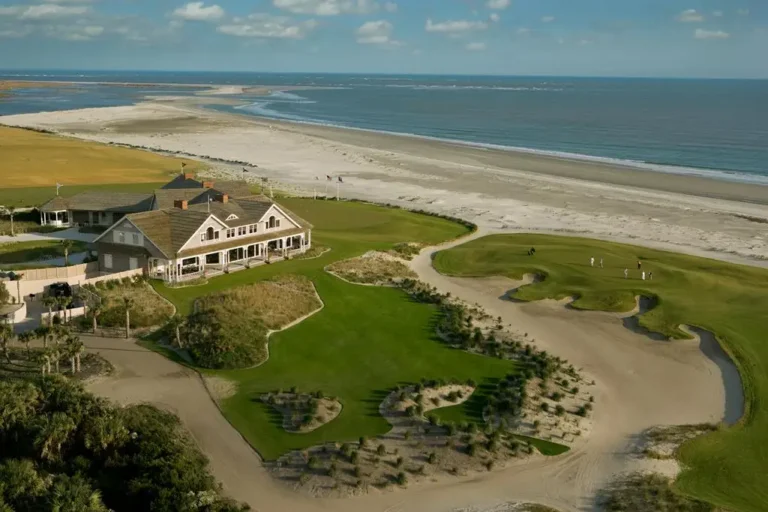
These resorts are built on sandy, wind-swept terrain adjacent to the sea, primarily in Scotland, Ireland, and coastal Oregon. The architecture relies on natural dunes, deep bunkers, and native fescue grasses.
-
Trade-offs: These properties offer historical prestige and an authentic walking experience. However, they are vulnerable to unpredictable weather and often feature utilitarian rather than modern luxury lodging.
2. Managed Estate and Parklands
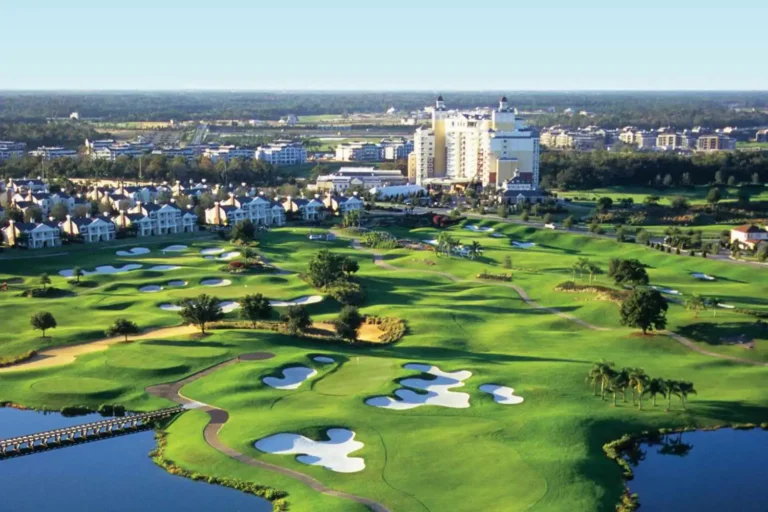
Common in the American South, inland Europe, and parts of Asia, these resorts are set within mature forests and river valleys. They are characterized by lush, heavily irrigated fairways, water hazards, and expansive cart paths.
-
Trade-offs: These estates offer climate control, flawless turf, and top-tier amenities. However, the layouts can sometimes feel formulaic and lack the unique character of more natural terrains.
3. Arid and Desert Oases
Prominent in regions like Arizona and the Middle East, these courses carve green fairways through desert landscapes. They rely on “target-golf” designs, where missed shots land in native sand, rock, or cacti.
-
Trade-offs: These destinations provide reliable winter sunshine and striking visuals. However, they carry high environmental footprints and are subject to seasonal overseeding cycles that can disrupt play.
4. Mediterranean and Cliffside Microclimates
Found in coastal Europe, South Africa, and California, these properties leverage dramatic elevation changes overlooking the ocean. Designs emphasize panoramic views and complex, undulating greens affected by sea breezes.
-
Trade-offs: They deliver spectacular scenery and exceptional cuisine. However, the steep terrain often makes walking impossible and requires mandatory cart use, which alters the rhythm of the game.
5. Tropical All-Inclusive Enclaves
Located in the Caribbean, Mexico, and Southeast Asia, these resorts bundle championship golf with high-end, all-inclusive hospitality. Courses often feature wide, forgiving fairways to keep recreational play moving.
-
Trade-offs: They provide a seamless, low-stress experience for groups and families. However, the courses may lack architectural nuance and feature slower green speeds to accommodate casual players.
Comparative Evaluation
| Resort Category | Agronomic Profile | Ideal Skill Profile | Operational Density | Primary Risk Factor |
| Coastal Links | Fescue/Bent | Low-Mid Handicap | Typically Low | Extreme weather |
| Estate/Parkland | Bent/Ryegrass | Universal Appeal | Moderate-High | Slow pace of play |
| Desert Oasis | Bermuda/Rye | Mid-High Handicap | Moderate | Overseeding cycles |
| Mediterranean | Paspalum/Hybrid | Universal Appeal | Low-Moderate | Wind/Cart logistics |
| Tropical | Paspalum | Recreational | High | Overcrowding |
Decision Logic for Destination Selection
To select a destination effectively, apply this four-step logic to eliminate options that do not fit your profile:
-
Define the group’s handicap range: Eliminate categories that are too difficult or too simplistic for the skill level involved.
-
Assess infrastructure requirements: Determine if you prioritize absolute golf purity (Links) or integrated lifestyle amenities (Tropical/Estate).
-
Evaluate the travel window: Check if the preferred category faces high-risk maintenance periods (e.g., desert overseeding) during your planned dates.
-
Confirm logistical feasibility: Identify if the terrain allows for walking or requires the specific cart logistics dictated by the site’s elevation.
By using this approach, you ensure your trip is not derailed by mismatched skill levels or maintenance cycles, clarifying the selection process across various “best golf resorts” options.
Detailed Real-World Scenarios
To understand how these structural categories play out in practice, it is helpful to analyze several common travel scenarios. Each outline highlights the specific constraints, operational decisions, and potential failure modes that planners must manage.
The Multi-Generational Family Trip
-
Profile and Constraints: A party of eight, including two low-handicap players, four casual recreational golfers, and two non-playing companions. The travel window is limited to a one-week school holiday in mid-summer.
-
Destination Choice: A managed estate resort in the American Northeast or an integrated Mediterranean resort. This setup provides a multi-course layout alongside extensive non-golf amenities like tennis academies, comprehensive spas, and kids’ programs.
-
Operational Decision Point: The planner must secure early morning tee times for the dedicated players to ensure they finish before the daily resort peak, while simultaneously booking afternoon family clinics or alternative activities for the rest of the group.
-
Potential Failure Modes: Booking a pure, walking-only links property. This decision can leave non-playing companions isolated in remote areas and frustrate casual golfers facing extreme wind conditions and unforgiving terrain.
-
Second-Order Effects: Group polarization, where the dedicated golfers spend the entire trip away from the family, undermining the cohesive vacation goal.
The Dedicated Players’ Pilgrimage
-
Profile and Constraints: Four low-handicap players focused entirely on maximizing total holes played over a four-day window. They prefer walking, value architectural history, and are willing to travel to remote locations.
-
Destination Choice: A remote links resort or a dedicated multi-course property in regions like Southwest Ireland, Scotland, or the Oregon coast.
-
Operational Decision Point: Utilizing a “replay” booking strategy, which secures a guaranteed morning tee time while leaving the afternoon open for a discounted second round on an alternate onsite course.
-
Potential Failure Modes: Selecting a high-density, real-estate-focused resort. These properties often mandate cart use, feature slow-moving resort traffic, and enforce strict limits of one round per day during peak seasons.
-
Second-Order Effects: Severe physical fatigue or injury if the itinerary does not account for the physical toll of walking 36 holes a day on rugged, uneven links terrain.
The Corporate Client Retreat
-
Profile and Constraints: Twenty corporate executives with widely varying playing abilities. The goal is to facilitate networking, host formal dinners, and provide a polished, premium experience over three weekdays.
-
Destination Choice: A high-end parkland estate with extensive conference facilities and proximity to a major aviation hub.
-
Operational Decision Point: Arranging a modified shotgun start or a blocked tee-time segment, paired with dedicated forecaddies for each group to maintain a steady pace of play and assist less experienced players.
-
Potential Failure Modes: Choosing an architecturally punishing course with narrow fairways and deep hazards. This can lead to five-hour-plus rounds, high frustration levels, and less time for scheduled corporate networking events.
-
Second-Order Effects: Damaged client relationships if high-handicap participants feel embarrassed by an overly difficult course layout or inadequate on-course support.
Planning, Cost, and Resource Dynamics
The financial commitment required for a premium golf excursion extends far beyond the basic cost of lodging and green fees. A truly thorough plan must account for both direct and indirect expenses, alongside the opportunity costs associated with travel logistics and tee-time availability.
Direct vs. Indirect Costs
-
Green Fees and Premium Access: At top-tier resorts, peak-season green fees can represent a significant percentage of the daily budget. Many elite properties require guests to stay on-site to secure tee times on their premier courses, embedding the golf premium directly into the room rates.
-
Caddie Systems and Gratuities: For traditional walking courses, caddie or forecaddie fees are often mandatory or highly recommended. These fees generally require cash payments directly to the caddie, plus discretionary performance tips based on local regional standards.
-
Logistics and Equipment Transport: Shipping golf travel bags internationally via specialized courier services reduces the risk of airline loss and transit damage, but it introduces a fixed, non-refundable cost per player. Alternatively, relying on premium on-site rental sets avoids transport logistics but adds a daily rental fee and requires adjusting to unfamiliar equipment.
Comprehensive Cost Analysis Across Tiers
The following range-based table outlines the projected daily expenditures per player across three distinct market segments, based on 2026 pricing structures:
Tools, Strategies, and Support Systems
Executing a seamless trip across various best golf resorts requires using modern digital tools, specialized travel services, and strategic booking practices.
-
Dedicated Luggage Shipping Services: Utilizing specialized transit companies allows players to send clubs directly from their home residence to the resort concierge, bypassing airport baggage claims and reducing transit friction.
-
Digital Caddie and GPS Mapping Applications: Platforms like Hole19 or Arccos provide detailed 3D course flyovers, exact hazard distances, and live scorecards. Downloading these course profiles ahead of time gives players essential strategic insights when navigating unfamiliar championship layouts.
-
Specialized Inbound Golf Tour Operators: For complex destinations like the Scotch Highlands or southwest Ireland, working with an authorized inbound tour operator is often the only way to secure guaranteed tee times on historic, high-demand courses.
-
Predictive Weather and Microclimate Trackers: Because coastal and mountain courses experience rapid weather shifts, using high-resolution localized weather apps helps players choose the right apparel and adjust their course strategy day by day.
-
Turf Care Monitoring Frameworks: Checking regional superintendent blogs or agronomic updates helps planners track aeration schedules and overseeding windows, ensuring they avoid booking right during major maintenance cycles.
-
Consensus Travel Review Aggregators: Platforms like Leading Courses provide data-driven rankings by blending direct player reviews with verified accommodation scores. This offers an objective look at a property’s current operational state, helping travelers see past polished marketing materials.
Risk Landscape and Failure Modes
A premium golf trip can be impacted by several overlapping risks, ranging from unpredictable weather shifts to subtle operational bottlenecks at the resort. Managing these factors requires a clear understanding of potential failure points and a proactive approach to scheduling.
The Weather-Maintenance Compounding Loop
This failure mode occurs when poor weather combines with intense course maintenance. For example, if a resort experiences heavy, unseasonal rainfall, carts may be restricted to the paths. This change naturally slows down play across the entire field. If the resort has also squeezed extra tee times onto the schedule to make up for a previous weather delay, the course can quickly become congested. This compounding delay can push afternoon rounds past twilight, forcing players off the course before they finish and disrupting dinner reservations and evening events.
The Service-Labor Dilution Deficit
A rising challenge across the luxury hospitality sector is the variance in seasonal staffing levels. If a resort expands its room capacity or adds a new course layout without proportionally growing its guest services, caddie master department, and culinary teams, the service standard drops. Guests may experience long delays at the bag drop, unreturned calls for tee-time adjustments, and slower service in the dining rooms, which directly undercuts the premium experience promised by the property.
Governance, Maintenance, and Long-Term Adaptation
To protect travel investments from unexpected operational shifts, planners should establish a clear review process and follow a structured preparation checklist before departure.
The Operational Review Cycle
When tracking potential destinations, rely on a simple check-in timeline to catch any sudden changes in course conditions:
-
90 Days Out: Check for recent changes in management, unexpected turf illnesses, or major construction updates through local golf forums and regional turf management blogs.
-
30 Days Out: Confirm the exact dates for seasonal maintenance, including greens aeration, sand top-dressing, or overseeding transitions.
-
7 Days Out: Review localized microclimate forecasts and adjust packing strategies for specific gear requirements, such as high-wind umbrellas or cold-weather layers.
Pre-Departure Operational Readiness Checklist
Measurement, Tracking, and Evaluation
Evaluating the success of a premium golf trip involves balancing concrete operational metrics with qualitative feedback on the hospitality experience. Relying on clear indicators helps travelers evaluate their stay objectively and make better decisions for future trips.
Leading vs. Lagging Indicators
-
Leading Indicators: These are measurable signs checked before or during the trip that point to the quality of the experience. Examples include the density of the tee sheet (minutes between tee times), the historical weather reliability for that specific week, and the ratio of resort guests to private members on the course.
-
Lagging Indicators: These are metrics analyzed after the trip to evaluate overall value. Examples include the average pace of play (striving for under 4 hours and 15 minutes), the physical condition of the greens during play, and the consistency of guest service response times throughout the stay.
Quantitative Data vs. Qualitative Signals
-
Quantitative Metrics: Look for clear, objective data point measurements. This includes tracking true green speeds via the Stimpmeter index, observing the exact minute intervals between tee times (10-to-12-minute windows are preferred over tight 8-minute cycles), and recording actual round durations.
-
Qualitative Signals: These involve more subjective elements that define luxury service. Pay attention to the local insight and professionalism of the caddie staff, the flexibility of the culinary team when handling off-menu requests, and the general sense of space and tranquility across the practice facilities and clubhouse areas.
Common Misconceptions and Oversimplifications
The destination golf market is filled with persistent myths that can easily skew travel expectations if accepted without critique.
-
The Major Championship Venue Myth: A common misconception is that a course hosting a major professional tournament always delivers the best experience for recreational travelers. In reality, championship layouts are engineered to test elite players under extreme conditions. For average golfers, this can translate into an overly punishing, frustrating round featuring narrow fairways and deep, severe hazards. Furthermore, these historic venues often command a heavy price premium based purely on their tournament pedigree rather than their day-to-day resort amenities.
-
The Five-Star Universal Correlation Error: Many planners assume that a hotel with a five-star hospitality rating guarantees top-tier golf operations. However, golf operations require specialized management independent of the hotel staff. A resort can offer immaculate guest rooms and exceptional fine dining while suffering from poor pace-of-play management, worn practice facilities, and subpar turf conditions.
-
The All-Inclusive Cost Fallacy: It is frequently assumed that booking an all-inclusive package covers every meaningful aspect of a golf trip. In practice, premium amenities—such as accessing a signature course, hiring a caddie, using practice tracking technology, or ordering high-end wines at dinner—are often excluded from base packages. Travelers should carefully read the fine print to identify hidden fees and ensure an accurate total budget.
Conclusion
Selecting from the world’s best resort options is ultimately an exercise in balancing athletic expectations with hospitality needs. A successful trip requires looking past simple, high-level rankings to analyze the underlying architecture, operational balance, and seasonal cycles of each destination. By applying structured mental models, evaluating costs thoroughly, and preparing for common operational risks, travelers can design itineraries that protect their investments and ensure long-term travel value. As the global golf hospitality landscape continues to grow and evolve, maintaining a clear, analytical approach remains the most effective way to identify destinations that deliver reliable, world-class experiences.