Best Golf Resorts for Families: Structural Optimization Guide
The intersection of multi-generational travel and specialized sports tourism presents a complex operational puzzle. For decades, the hospitality sector treated family travel and championship golf as mutually exclusive domains. Resorts historically optimized for one at the expense of the other: either constructing spartan, hyper-challenging golf enclaves that alienated non-playing family members, or establishing sprawling family environments where the golf course was an afterthought, characterized by poor maintenance and uninspired architecture.
Today, a sophisticated subset of destinations has resolved this tension. Evaluating the best golf resorts for families requires analyzing how a property reconciles the rigid architectural demands of a championship golf facility with the variable, multi-tiered infrastructure needed to sustain family engagement over an extended stay. This balancing act goes beyond offering a rudimentary kids’ club or a single forward tee box. It demands an intentional system where practice facilities, course routing, real estate configurations, and non-golf programming work together without diluting the core sporting experience.
For the traveling family, selecting a destination involves managing competing priorities. The primary golfer often seeks architectural merit, tournament-grade turf conditions, and a compelling psychological test. Concurrently, children, teenagers, and non-golfing spouses require varying degrees of recreational autonomy, instructional entry points, and wellness infrastructure. When these systems are poorly integrated, the trip can fall apart—leading to high financial outlays matched by widespread dissatisfaction among family members.
To establish a reliable framework for comparison, this analysis bypasses superficial marketing claims and focuses on structural variables. True family golf utility is determined by the adaptability of the physical footprint, the pedagogical soundness of the junior academies, the logistical ease of multi-generation dining and lodging, and the resilience of the resort’s alternative programming. This document provides a definitive, operational blueprint for understanding, categorizing, and selecting premier family golf environments globally.
Understanding “Best Golf Resorts for Families”

Evaluating the best golf resorts for families requires moving past standard travel industry metrics. The travel market frequently uses the term “family-friendly” as a generic label for any property that tolerates the presence of children. In the context of premium golf tourism, this superficial definition fails to account for the real operational friction that occurs when high-handicap children or casual players share a physical asset with serious, traditional golfers.
A true family golf resort treats both the eight-year-old novice and the scratch-handicap parent as primary users. This means the destination must offer parallel value streams. When a property fails to achieve this balance, it typically falls into one of two design traps:
-
The Penal Enclave: The resort features an iconic, major-championship-tested layout with deep forced carries, thick rough, and severe green complexes. While this appeals to the dedicated golfer, it causes high frustration, lost golf balls, and severe pace-of-play issues for developing juniors or a spouse returning to the game.
-
The Diluted Pasture: In an attempt to accommodate everyone, the course architecture is stripped of strategic interest. Fairways are excessively wide, hazards are removed, and greens are flattened. The scratch golfer is left bored, feeling that the premium green fees are mathematically unjustified.
The solution lies in structural flexibility. Properties that genuinely earn the title of best golf resorts for families use smart design features like dual-path routing, comprehensive short courses (ranging from 3 to 12 holes), and dedicated practice facilities equipped with tracking technology. These additions change golf from a rigid four-and-a-half-hour isolation ritual into an inclusive, shared family activity.
Logistical integration is equally critical. A resort cannot be considered optimized for families if the practice range is a twenty-minute shuttle ride from the lodging, or if the clubhouse dining menu ignores the nutritional needs and schedules of younger children. The entire ecosystem—from the proximity of the first tee to the design of multi-bedroom villas—must be intentionally organized to minimize the friction of moving a group through their daily itinerary.
Deep Contextual Background: The Evolution of Family Golf Infrastructure
The modern family golf resort is the result of significant shifts in real estate development, changing consumer demographics, and modern course architecture. Historically, the post-World War II golf boom in the United States was driven by an exclusionary, male-centric private club model. Early resorts mirrored this structure, presenting golf as an isolated retreat for the corporate executive while family members were relegated to secondary tennis courts or basic pool facilities.
The initial shift began in the late 1960s and 1970s with the rise of planned residential golf communities, particularly across the American Sunbelt in regions like Hilton Head Island, Scottsdale, and Central Florida. Developers realized that golf courses could serve as visual anchors to sell premium vacation real estate. Because these properties were marketed to families as multi-generational vacation homes, resorts began expanding their non-golf amenities, introducing supervised youth programs and larger pool complexes. However, the golf courses themselves remained highly traditional and inflexible.
During the golf course construction boom of the 1990s, developers focused heavily on creating signature, championship courses designed by famous architects. These courses were often intentionally difficult to attract high-profile corporate outings and amateur tournaments. This trend inadvertently made the game less accessible for families. The resulting long rounds, high ball losses, and strict dress codes drove down junior participation and created an intimidating environment for casual players.
The modern era, which began accelerating around 2010 and solidified post-2020, represents a structural correction. Facing declining retention rates and shifting millennial family values—which prioritize shared experiences over isolated leisure—leading resorts began redesigning their layouts. Forward-thinking properties started investing heavily in unrated short courses, putting courses, and casual learning environments. By lowering the barrier to entry, these resorts transformed golf from a rigid sport into an approachable family activity, while preserving their main championship courses for serious play.
Conceptual Frameworks and Mental Models
To systematically evaluate how effectively a destination caters to different family needs, we can apply four core mental models. These frameworks isolate the operational variables that separate world-class family integration from standard marketing claims.
1. The Skill-Velocity Equilibrium
This model measures how effectively a resort helps a player progress from total novice to autonomous golfer without disrupting the flow of the resort’s main courses.
-
Instructional Accessibility: The availability of unrated green grass spaces, casual practice loops, and welcoming learning environments.
-
Architectural Scalability: The presence of multiple, distinct sets of tees—including specific junior tees set at mathematically sound yardages—and family-friendly angles into green complexes.
-
Pace-of-Play Friction: The operational drag caused when high-handicap players encounter design features intended for elite golfers, such as deep penal bunkers or long forced carries.
2. The Core-Satellite Utility Model
This framework separates the primary golfing experience from secondary resort amenities, examining how smoothly family members can transition between them.
-
The Core Asset: The primary golf course and its supporting practice facilities.
-
The Satellite Assets: The kids’ clubs, spa facilities, tennis centers, water parks, and alternative dining venues.
-
The Friction Point: When core and satellite assets are physically distant, families waste significant time on logistics (such as long shuttle rides), which breaks up the shared vacation experience. High-utility resorts design their footprints so these zones connect seamlessly at a central hub.
3. The Multi-Generational Autonomy Paradigm
A successful family vacation requires balancing group time with individual autonomy. This paradigm evaluates whether a resort’s physical layout allows teenagers, young children, parents, and grandparents to follow their own schedules safely and independently without leaving the resort property.
-
High Autonomy: Gated, pedestrian-friendly layouts featuring multi-bedroom villas, interconnected trail systems, and centralized activity zones where older children can navigate safely without parental transit.
-
Low Autonomy: High-rise hotel formats situated on busy public roads, requiring valet service or formal resort shuttles for every movement. This structure forces families to coordinate all activities around a single schedule, creating unnecessary friction.
4. The Time-To-Impact (TTI) Matrix for Leisure
This matrix calculates the actual time required to transition from a non-golf activity into an active golf experience.
Key Categories of Family Golf Resorts
Not all family golf resorts are engineered the same way. The market is divided into six distinct categories, each defined by its architectural layout, regional geography, and primary amenities. Understanding these divisions helps families match their specific vacation goals with the right resort profile.
1. The Autonomous Mega-Destination
These are expansive, self-contained properties (often exceeding 1,000 acres) that function as private eco-systems. They typically feature multiple championship courses, massive water parks, extensive real estate developments, and highly organized youth academies.
-
Trade-Offs: They offer unmatched variety and high operational reliability, but the sheer scale can feel corporate, commercial, and detached from the local culture.
2. The Historic Heritage Estate
Classic properties that have spent decades evolving their golf and hospitality offerings. These resorts focus heavily on traditional service standards, formal dining experiences, and deeply rooted golf history.
-
Trade-Offs: They provide exceptional service and world-class, historic course designs, but their conservative dress codes and structured environments can sometimes feel intimidating to younger children or casual golfers.
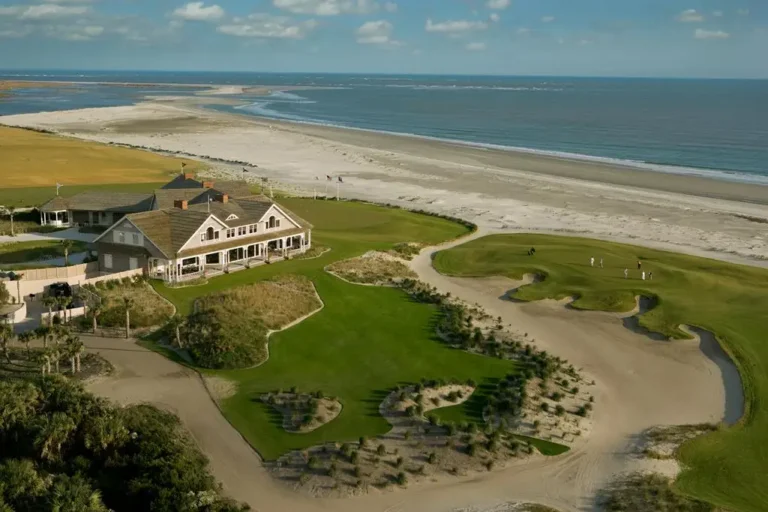
3. The Coastal Links/Oceanfront Enclave
Destinations built directly along major coastlines, where golf courses interact directly with the ocean and sandy dune systems.
-
Trade-Offs: They offer breathtaking views and elite, bucket-list course routing. However, the coastal wind, firm turf, and unpredictable weather can make the golf highly challenging for high-handicap family members.
4. The High-Desert Oasis
Properties located in arid climates, defined by manicured green fairways that contrast sharply with the surrounding desert landscape.
-
Trade-Offs: They offer excellent, predictable weather for most of the year and immaculately maintained courses. The primary challenge is the target-style architecture; missing the fairway often means landing in rugged desert terrain, leading to lost golf balls and slow play for beginners.
5. The Mountain Wilderness Lodge
Resorts nestled in elevated alpine environments, where course layouts navigate dramatic elevation changes, dense pine forests, and rocky river systems.
-
Trade-Offs: They provide a refreshing outdoor environment with diverse non-golf activities like hiking, fly-fishing, and mountain biking. However, the steep terrain means walking the course is rarely an option, and the golf season is limited by mountain winter cycles.
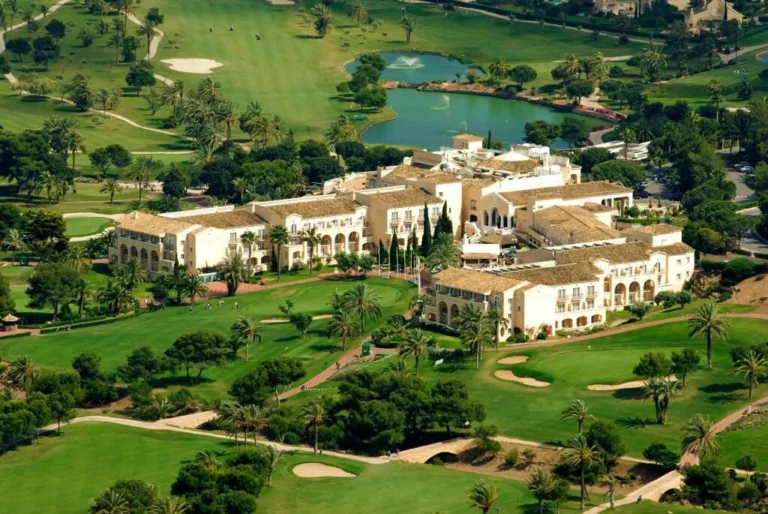
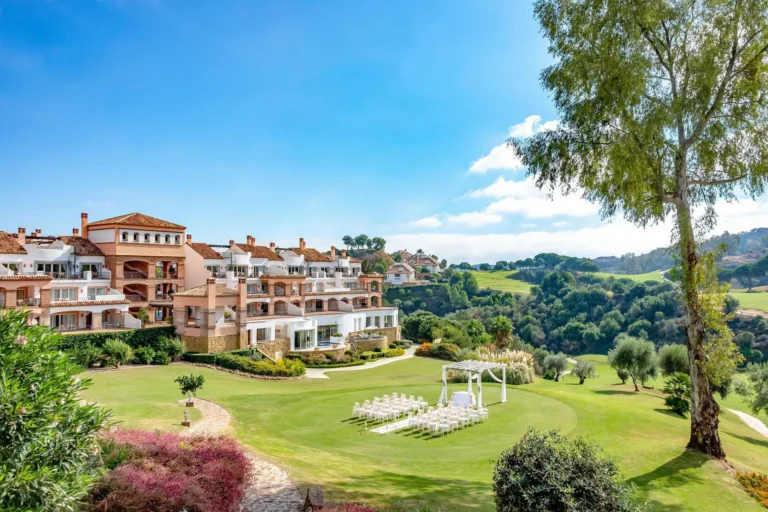
6. The European All-Villa Golf Estate
Commonly found across southern Europe, these properties focus on low-density luxury, Mediterranean dining, and self-contained villa living paired with championship golf.
-
Trade-Offs: They offer maximum privacy, spacious multi-generational lodging, and a sophisticated, relaxed pace. However, they generally feature fewer organized youth activities compared to large North American destinations, requiring families to be more self-directed.
Structural Comparison Matrix
To see how these categories handle family and sporting needs, we can evaluate them across key operational categories.
Analyzing how different family dynamics interact with a resort’s infrastructure reveals the practical challenges that can arise during a stay. Below are four realistic profiles that demonstrate how specific design choices impact the vacation experience.
The Multi-Generational Group (Ages 8 to 74)
-
The Cohort: Grandparents (experienced, slow-swinging golfers), Parents (one avid golfer, one non-golfer), and Children (ages 8 and 11, total beginners).
-
The Challenge: Finding an environment that offers a genuine golf challenge for the avid players, accessible play for the grandparents and kids, and high-end alternative activities for the non-golfer.
-
The Operational Solution: A destination featuring an 18-hole championship course paired with an unrated, reversible 9-hole short course and a large putting green.
-
The Outcome: The avid parent plays the main course early in the morning. In the afternoon, the entire family gathers on the putting greens or the short course for a casual round where dress codes are relaxed, and scorekeeping is optional. The non-golfing parent spends the day at a centrally located wellness facility that is easily accessible from the short course loop, allowing the family to meet for lunch without logistical delays.
The Hyper-Competitive Family with Junior Tournament Players
-
The Cohort: Two parents (both with single-digit handicaps) and two teenagers competing in regional junior tournaments.
-
The Challenge: The family requires tournament-grade practice facilities, accurate ball-tracking technology, and demanding course conditions to maintain their training regimens while on vacation.
-
The Operational Solution: A resort with multiple championship layouts, comprehensive short-game practice areas that allow for realistic wedge testing, and integrated launch monitor technology on the driving range.
-
The Outcome: The family utilizes the resort’s advanced training facilities in the morning to run structured practice sessions. They spend the afternoons playing the championship courses from the back tees, experiencing tournament-level green speeds and complex course strategies. The trip functions successfully as both a high-level training camp and a shared family experience.
The Divided Intent Family (Avid Golfer paired with Non-Golfing Family)
-
The Cohort: One parent who wants to play 36 holes a day, a spouse focused on high-end spa and fitness options, and a toddler.
-
The Challenge: Preventing the avid golfer from feeling isolated, ensuring the spouse has access to premium wellness amenities, and securing reliable child care.
-
The Operational Solution: A compact, high-density luxury resort where the championship course begins and ends directly at a central clubhouse, which also houses the main spa and childcare facilities.
-
The Outcome: Because the facilities are centralized, the golfing parent can easily check in between rounds. The childcare center is located right next to the spa and the practice green, allowing the family to stay connected throughout the day and meet effortlessly for meals without navigating long transit routes.
The Teenager Retention Dilemma
-
The Cohort: Parents who enjoy casual golf and two teenagers (ages 14 and 16) who are easily bored by traditional resort environments.
-
The Challenge: Engaging teenagers who reject organized kids’ clubs but still need safe, autonomous social spaces alongside casual recreation options.
-
The Operational Solution: A resort that integrates casual technology into its golf facilities—such as an illuminated, gamified driving range with evening music—paired with independent outdoor activities like surf schools, mountain bike parks, or skate tracks.
-
The Outcome: The teenagers avoid the traditional structured daytime activities but actively engage with the resort’s gamified driving range and casual evening events. The pedestrian-friendly layout allows them to move safely between the sports complexes and dining areas without parental supervision, preserving family harmony.
Planning, Cost, and Resource Dynamics
A comprehensive family golf trip requires managing a variety of direct and indirect expenses. Beyond the base room rate, the total cost of a stay is shaped by dynamic green fees, equipment logistics, instructional programs, and resort service charges.
1. Direct Costs and Fees
-
Dynamic Green Fees: Premium resorts adjust green fees based on seasonal demand, time of day, and course popularity. Morning tee times on a championship course carry a significant premium, while afternoon and twilight rates offer substantial discounts.
-
Ancillary Golf Costs: Cart fees, caddie gratuities, and forecaddie fees are often mandatory at top-tier destinations. For a family of four, mandatory caddie fees can add an extra $200 to $400 per round before tips.
-
Equipment Shipping vs. Rental: Shipping four sets of clubs via specialized luggage services avoids the hassle of airport transit but requires advanced planning and carries a fixed cost. Conversely, relying on resort rentals provides convenience and the chance to test new equipment, but daily rental fees can quickly exceed the cost of shipping for a week-long stay.
2. Indirect Costs and Capital Considerations
-
Lodging Efficiency: While booking multiple standard resort rooms may look cost-effective initially, upgrading to a multi-bedroom villa or a private estate home often yields better long-term value. Villas provide private kitchens and shared living spaces, reducing the need for expensive three-meal-a-day restaurant dining for a large group.
-
Opportunity Costs of Isolation: Selecting a resort solely for its elite, world-renowned golf course can backfire if the property lacks engaging amenities for non-golfers. The financial investment is wasted if non-playing family members feel trapped in an isolated environment, leading them to cut the trip short or book expensive off-site excursions.
Expense and Investment Matrix
The following table outlines the expected financial breakdown across different budget categories for a five-night stay for a family of four.
Tools, Strategies, and Support Systems
Managing a successful family golf vacation requires utilizing specific tools and booking strategies to maximize value and minimize stress.
-
Club Shipping Services: Utilizing dedicated golf bag shipping companies allows families to send their equipment directly from their home to the resort concierge. This eliminates the physical strain of managing multiple large travel bags at airport check-ins and rental car counters.
-
Dynamic Tee-Time Booking Apps: Premium resort networks use integrated applications that let guests book tee times, schedule golf lessons, secure caddies, and reserve dining spots weeks before arrival. Families should use these platforms early to lock in optimal morning tee times before fields fill up with corporate outings.
-
Advanced Launch Monitors and Tracking Apps: Resorts that equip their practice ranges with ball-tracking technology provide families with data-driven practice sessions. Younger players enjoy the gamified formats, while serious golfers get accurate performance data during their vacation.
-
Unified Property Management Systems: Top resorts link all guest profiles to a single account or mobile app. This allows a teenager to charge a basket of range balls, a parent to sign for a round of golf, and a spouse to pay for a spa treatment using a single, consolidated billing system, simplifying expense tracking.
-
Junior Rental Gear Networks: Forward-thinking pro shops offer high-quality junior rental sets tailored to specific height and age brackets. Families should confirm availability with the pro shop beforehand to avoid traveling with rapidly growing children’s clubs.
-
Comprehensive Youth Academies: The best junior programs move away from simple babysitting and offer structured, professional instruction using game-based learning models. These academies introduce young children to golf fundamentals in a fun, low-pressure environment, fostering long-term interest in the sport.
Risk Landscape and Failure Modes
A family golf vacation can encounter several operational risks that can compromise the experience. Identifying these failure modes early allows travelers to take preventive steps.
1. The Pace-of-Play Conflict
-
The Risk: A family group with casual or junior players books a morning tee time on a challenging championship course. They quickly fall behind the resort’s strict pace-of-play schedule, leading to intervention from the course marshal.
-
The Consequence: The family feels rushed, stressed, and embarrassed, while groups behind them grow frustrated. This tension can ruin the day and discourage beginners from wanting to play again.
-
Prevention: Save the championship course for skilled players during peak hours. Move family rounds to the afternoon, twilight windows, or dedicated short courses where the atmosphere is naturally more relaxed.
2. Environmental and Seasonal Vulnerability
-
The Risk: Booking a trip during a region’s shoulder season without checking the local course maintenance schedule.
-
The Consequence: Arriving to find the greens have just been aerated (punched and sanded) or the fairways are undergoing overseeding. This significantly degrades turf quality and putting consistency, reducing the value of premium green fees.
-
Prevention: Always call the director of golf directly before booking to confirm that no major turf maintenance or aeration cycles will occur during your stay.
3. The Satiation and Burnout Effect
-
The Risk: Forcing younger children or casual players into long, multi-day golf schedules without built-in rest periods.
-
The Consequence: Physical exhaustion and mental burnout. What was meant to be a fun sport becomes a chore, leading to arguments and a fractured vacation experience.
-
Prevention: Follow a balanced schedule. For every day of intensive golf, schedule a full day of alternative recreation, spa visits, or local excursions to keep everyone refreshed.
Governance, Maintenance, and Long-Term Adaptation
To keep a family golf itinerary running smoothly, travelers should use a structured monitoring and adjustment strategy throughout their stay.
Operational Review Cycle
Families should conduct a brief, informal check-in every evening to review the day’s experiences and adjust the upcoming schedule. If a child showed signs of severe fatigue during a round, the parent should proactively move the next day’s tee time to a shorter loop or swap a full round for a casual session on the putting course.
The Layered Family Readiness Checklist
This checklist helps ensure all logistics are coordinated smoothly across the stay.
1: Pre-Arrival Verification (30 Days Prior)
-
Confirm that no course aeration, top-dressing, or major tournament preparation is scheduled.
-
Pre-book all prime morning tee times for championship courses.
-
Reserve slots in junior academies and secure necessary childcare services.
-
Coordinate club shipping details or pre-arrange rental sets with the pro shop.
2: Staging and Registration (Day of Arrival)
-
Link all family member profiles to a centralized resort billing account.
-
Deliver shipped clubs to the staging area and verify bags are complete.
-
Check junior rental sets for correct sizing, length, and grip comfort.
-
Walk the central hub to map out the walking paths between the lodging, first tee, and youth amenities.
3: In-Play Execution (Daily)
-
Check local weather forecasts to ensure gear matches changing wind or rain conditions.
-
Confirm tee-time intervals with the starter to gauge expected course traffic.
-
Verify that younger players have adequate hydration and sun protection before heading out.
-
Review pace-of-play performance after nine holes to adjust group spacing if needed.
Measurement, Tracking, and Evaluation
A successful golf trip can be evaluated using both quantitative metrics and qualitative indicators. Tracking these signals helps families optimize future vacations.
1. Leading vs. Lagging Indicators
-
Leading Indicators: Metrics gathered before or during the round that predict the overall quality of the experience. Examples include the gap between tee times (10-minute intervals are superior to 8-minute intervals), range congestion levels, and morning green speeds.
-
Lagging Indicators: End-of-trip measurements that confirm whether the vacation met its goals. Examples include the total number of holes completed without frustration, total family satisfaction scores, and tracking junior skill development.
2. Quantitative Data Signals
-
Pace of Play: Tracking total round length. A family-friendly round on a championship course should ideally hover around 4 hours and 15 minutes. If rounds stretch past 4 hours and 45 minutes, it indicates high structural friction.
-
Ball Loss Ratio: A simple, reliable metric for beginner engagement. If a junior or casual golfer loses more than four balls per nine holes, the course architecture is too penal for their current skill level, and play should be shifted to an easier layout.
3. Qualitative Evaluation Examples
The following examples demonstrate how to evaluate the success of a trip across different family profiles.
Common Misconceptions and Oversimplifications
The family golf travel market is filled with persistent myths that can lead to poor planning decisions. Debunking these common misunderstandings is essential for setting realistic expectations.
-
The “Forward Tee” Fallacy: Many believe that simply adding a set of forward tees makes any championship course family-friendly. In reality, if a course features wide wetlands, long forced carries over water, or deep bunkers right in front of the green, a forward tee does little to alleviate frustration for low-trajectory or beginner hitters. True scalability requires accessible, hazard-free pathways to the putting surface.
-
The “Top-100” Obsession: Booking a resort solely because its main course ranks highly on global “Top-100” lists can often backfire for family trips. These courses are frequently designed as uncompromising tournament tests. For a multi-generational group, a resort with a highly versatile, unranked 27-hole layout and a world-class short course will almost always deliver a better vacation experience than an ultra-difficult, single-course championship venue.
-
The Kids’ Club Security Blanket: Assuming that a generic resort kids’ club can fully substitute for family golf integration is a common mistake. If the youth program is treated merely as a daycare service disconnected from the golf facilities, the family ends up spending the vacation completely separated. The most successful destinations build programming that connects generations rather than isolating them.
Ethical, Practical, or Contextual Considerations
As golf resorts look to the future, they must balance luxurious hospitality with long-term environmental responsibility. Maintaining pristine, tournament-grade turfgrass requires significant water, energy, and chemical inputs. In drought-prone areas like the American Southwest or the Mediterranean, this creates real ecological challenges.
Modern travelers increasingly favor resorts that prioritize sustainable management. Leading destinations are investing heavily in eco-friendly infrastructure:
-
Water Reclamation Systems: Utilizing advanced recycled greywater networks to irrigate fairways, ensuring the resort does not deplete local municipal drinking water sources.
-
Drought-Tolerant Turf Hybrids: Seeding modern, salt-tolerant grass varieties (like paspalum or specific bermudagrass mutations) that thrive on less water and tolerate alternative water qualities.
-
Expanding Native Eco-Zones: Reducing total manicured turf areas by letting natural desert, mountain, or coastal dune vegetation grow along fairway edges. This cuts water use, lowers chemical maintenance, and creates a more authentic local landscape.
By choosing destinations that prioritize environmental stewardship, families support business models that protect the natural landscapes that make golf travel so compelling.
Conclusion
Selecting the right family golf destination requires a careful look past standard marketing catchphrases. A truly successful trip relies on finding a resort with an integrated physical layout, adaptable course design, and flexible programming that accommodates every family member’s skill level and interests.
The ideal destination avoids the extremes of being either a punishing tournament enclave or a boring, oversimplified pasture. Instead, the premier resorts invest in flexible infrastructure: multi-tiered tee systems, engaging short courses, high-tech practice facilities, and premium non-golf amenities that hold their own against the championship courses.
Ultimately, a world-class family golf vacation is about more than lowering a handicap or checking an iconic course off a bucket list. It is about creating an environment where a scratch-golfer parent, a non-playing spouse, a grandparent, and a beginner child can all enjoy their day independently, then come together in the evening on a shared putting green or around a table. By matching a family’s unique dynamics with a resort engineered for balance, travelers ensure their investment yields lasting, multi-generational memories.